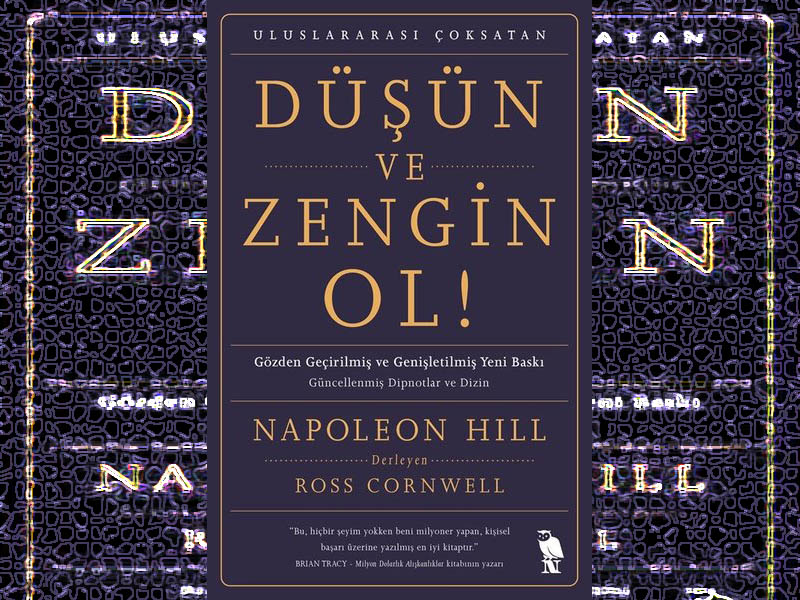
Think and Grow Rich Summary: Napoleon Hill’s 13 Steps to Success
“Think and Grow Rich” by Napoleon Hill is widely considered the “Granddaddy of All Motivational Literature.” First published in 1937, this masterpiece isn’t just a book about making money; it is a comprehensive philosophy of personal achievement and financial freedom.
Based on over 20 years of research and interviews with 500+ self-made millionaires like Andrew Carnegie, Hill synthesized the core principles of wealth into 13 actionable steps. Here is the ultimate detailed summary of these life-changing laws.
The Core Philosophy: Thoughts are Things
The central theme of the book is that wealth begins with a state of mind. If you can master your thoughts and align them with a definite purpose, success becomes an inevitable result.
The 13 Principles of Success: A Detailed Breakdown
1. Desire: The Starting Point of All Achievement
Success begins with a “Burning Desire.” A mere wish is not enough. You must have a fixed goal, a specific amount of money in mind, and a deadline to achieve it.
2. Faith: Visualizing the Attainment of Desire
Faith is the head chemist of the mind. By using visualization and affirmations, you convince your subconscious that you have already achieved your goal. Faith turns thoughts into their spiritual equivalent.
3. Auto-Suggestion: Influencing the Subconscious
This is the agency of communication between the conscious and subconscious mind. By repeating your goals aloud morning and night, you “program” your brain to recognize opportunities.
4. Specialized Knowledge
General knowledge won’t make you rich. You must acquire specific, specialized knowledge related to your goal or service. Remember: Knowledge is only potential power; it becomes real power when organized into a plan.
5. Imagination: The Workshop of the Mind
Ideas are the products of imagination.
-
Synthetic Imagination: Rearranging old ideas into new combinations.
-
Creative Imagination: Connecting with “Infinite Intelligence” to receive new inspirations.
6. Organized Planning
Desire without a plan is just a dream. To succeed, you must form a functional plan and, if the first plan fails, replace it with a new one until you reach your goal.
7. Decision: The Mastery of Procrastination
Successful people make decisions quickly and change them very slowly, if at all. Analysis paralysis and indecision are the primary causes of failure.
8. Persistence: The Sustained Effort Necessary to Induce Faith
Persistence is to the character of man what carbon is to steel. Most people quit at the first sign of misfortune. Only those who persist through “temporary defeat” reach the finish line.
9. Power of the Master Mind
No one achieves great success alone. A “Master Mind” group is a coordination of knowledge and effort between two or more people who work toward a definite purpose in a spirit of harmony.
10. The Mystery of Sex Transmutation
Sex energy is the most powerful human emotion. When “transmuted” or redirected, this energy can be harnessed into great creative, artistic, or professional achievements.
11. The Subconscious Mind: The Connecting Link
The subconscious acts as a bridge between the finite mind of man and Infinite Intelligence. Feed it with positive emotions like love and hope, and it will work 24/7 to solve your problems.
12. The Brain: A Broadcasting and Receiving Station
Hill believed the brain functions like a radio, capable of picking up “vibrations” from other minds and the universe. A focused mind becomes a magnet for ideas.
13. The Sixth Sense: The Door to the Temple of Wisdom
The final step is the Sixth Sense, or intuition. It is through this principle that Infinite Intelligence communicates voluntarily, warning you of dangers and notifying you of opportunities.
Final Verdict: Why You Should Read It
Napoleon Hill’s message is timeless: Success comes to those who become “success conscious.” By mastering these 13 steps, you can transform your mindset and, consequently, your financial reality.
This section is the most critical part of the book because, as Hill says, “Wishing will not bring riches.” To make this high-value for your English-speaking audience (and to boost your SEO for keywords like “How to manifest wealth” or “Success Mindset”), I have detailed this chapter with a professional and punchy tone.
Deep Dive: Principle 1 – DESIRE (The Starting Point of All Achievement)
In the opening chapter of Think and Grow Rich, Napoleon Hill argues that a mere “wish” for success or money is useless. To achieve greatness, you must transform your wish into a “Burning Desire” that consumes your thoughts and directs your actions.
The 6 Practical Steps to Transmute Desire into Gold
Hill provides a specific, six-step method to turn your mental desire into its physical and financial equivalent. These aren’t just suggestions; they are instructions for programming your subconscious mind.
1. Fix in your mind the exact amount
Be definite. It is not enough to say, “I want plenty of money.” You must define the exact number—down to the dollar. Your brain needs a clear target to hit.
-
Example: “I will have $10,000 in monthly recurring revenue.”
2. Determine exactly what you intend to give in return
There is no such reality as “something for nothing.” To get the wealth you desire, you must decide what service, labor, or value you will provide in exchange. What are you willing to sacrifice?
3. Establish a definite date
When exactly do you intend to possess the money you desire? A goal without a deadline is just a dream. Setting a date creates a sense of urgency and accountability.
4. Create a definite plan and START AT ONCE
Do not wait until you feel “ready.” Whether you are prepared or not, put your plan into action immediately. Procrastination is the primary killer of desire.
5. Write out a clear, concise statement
Take the four steps above and write them down in a single sentence.
-
Draft: “By December 31st, 2026, I will have $50,000, which will come to me in exchange for my services as a web developer. I have a plan to achieve this by…”
6. Read your written statement aloud, twice daily
Read it once just before retiring at night and once after arising in the morning. As you read, see, feel, and believe yourself already in possession of the money. This is the secret to Auto-Suggestion.
The “Burning Ships” Philosophy
Hill shares the story of a great warrior who landed his army on enemy shores and then ordered his men to “Burn the ships!” By cutting off all possibility of retreat, he ensured that his men had only two choices: Victory or Death.
-
The Lesson for You: To succeed, you must cut off all exits. If you have a “Plan B” in case you fail, you aren’t fully committed. A burning desire means you have decided that there is no turning back.
Principle 2: FAITH – Visualizing the Attainment of Desire
In Napoleon Hill’s philosophy, Faith is the “head chemist” of the mind. While Desire is the seed, Faith is the fertile soil that allows that seed to crack open and grow. Hill argues that Faith is not a religious trait you are born with; it is a mental muscle that can be developed through practice.
1. How to Build Faith: The Power of Repetition
Faith is a state of mind that can be induced by giving instructions to the subconscious mind through the principle of Auto-Suggestion. Hill notes that the subconscious mind cannot tell the difference between a true experience and a vividly imagined one.
-
The Formula: If you repeat a thought (a goal) combined with strong emotion, your subconscious eventually accepts it as a reality.
-
The Emotion Factor: Words alone are powerless. When you read your goals, you must evoke the feeling of excitement, gratitude, and pride as if you have already succeeded.
2. Visualization: The Mental Rehearsal
Visualization is the primary tool for building Faith. Hill instructs readers to “see and feel” themselves in possession of the money or the success they desire.
-
Be Specific: Don’t just imagine “money.” Imagine the texture of the bills, the smell of your new office, or the feeling of your signature on a major contract.
-
The Magnetism of Thought: Your mind is like a magnet. It attracts the people, circumstances, and resources that harmonize with your dominant thoughts.
3. The 5-Step Self-Confidence Formula
To strengthen Faith, Hill provides a “Self-Confidence Formula” to be signed and repeated daily:
-
Capability: I know I have the ability to achieve my goal. I demand of myself persistent, continuous action toward its attainment.
-
Dominant Thoughts: I realize that my thoughts will eventually result in physical action. Therefore, I will spend 30 minutes daily thinking of the person I intend to become.
-
Auto-Suggestion: I will devote 10 minutes daily to demanding the development of self-confidence within myself.
-
Written Purpose: I have clearly written down a description of my definite chief aim in life, and I will never stop trying until I have developed sufficient self-confidence for its attainment.
-
Social Justice: I will engage in no transaction which does not benefit all whom it affects. I will succeed by attracting the forces I wish to use and the cooperation of other people.
The Dark Side: The “Faith” in Failure
Hill warns that this principle works both ways. If you constantly talk about poverty, fear, or illness, your subconscious will use its “magnetic power” to bring those very things into your life. Fear is simply faith in the negative. To succeed, you must replace the habit of fear with the habit of faith.
Here is the professional English version of Principle 3: AUTO-SUGGESTION.
Principle 3: AUTO-SUGGESTION – The Bridge to the Subconscious
Auto-Suggestion is the agency of communication between the part of the mind where conscious thought takes place and that which serves as the seat of action for the subconscious mind. Hill describes it as the “control center” of your mental life.
1. The Garden of the Mind
Napoleon Hill uses a powerful metaphor: Your subconscious mind is like a patch of fertile ground.
-
If you consciously plant seeds of success, wealth, and health, you will reap a harvest of achievement.
-
If you neglect it, “weeds” of fear, doubt, and poverty will grow automatically from the environment around you.
2. How Auto-Suggestion Works
The subconscious mind does not question whether a thought is true or false. It accepts any statement that is repeated with intense emotion and unwavering faith. To make auto-suggestion work, you must master three elements:
-
Concentration: You must focus on your desired goal until it becomes a “fixed idea” in your mind.
-
Emotion: Words without emotion have no influence on the subconscious. You must feel the money in your hands or see the success happening as you speak.
-
Repetition: The subconscious is a creature of habit. You must “feed” it your goals every single day, morning and night.
3. The Practical Exercise: Communicating with the Subconscious
To apply this principle, Hill instructs you to take the written statement of your “Desire” (from Chapter 1) and perform the following:
-
Go to a Quiet Place: Close your eyes where you will not be disturbed.
-
Read Aloud: Repeat your written statement—the amount of money you want, the date, and the service you will give in return. Hearing your own voice adds another layer of mental imprinting.
-
Visualize the Possessions: As you read, see yourself already in possession of the money. Do not think of it as a future event; imagine it as a present reality.
-
Practice Daily: Do this every night before you sleep and every morning after you wake up.
The “Gatekeeper” of the Mind
Your conscious mind acts as a “gatekeeper” or a filter. It often rejects big goals by saying, “This isn’t realistic” or “You don’t have enough money.” Auto-suggestion is the technique used to bypass this gatekeeper by using repetition and emotion to convince the subconscious that the goal is already achieved.
Principle 4: SPECIALIZED KNOWLEDGE – Personal Experience or Observation
Napoleon Hill begins this chapter by debunking one of the biggest myths in society: “Knowledge is power.” Hill argues that knowledge is only potential power. It becomes actual power only when it is organized into definite plans of action and directed to a definite end.
1. The Definition of an “Educated” Person
The word “educate” is derived from the Latin educo, meaning to educe, to draw out, or to develop from within.
-
An educated person is not necessarily someone with an abundance of general or specialized knowledge.
-
Instead, an educated person is someone who has developed the faculties of their mind so that they may acquire anything they want, or its equivalent, without violating the rights of others.
-
Example: Henry Ford had very little formal schooling, but he was “educated” because he knew how to organize specialized knowledge to build an empire.
2. General vs. Specialized Knowledge
-
General Knowledge: This is what is taught in most universities. While valuable for culture, it is rarely useful in the accumulation of great wealth.
-
Specialized Knowledge: This is specific, practical information related to a particular field, trade, or profession.
3. You Don’t Need to Know Everything
One of the most liberating lessons in this chapter is that you do not need to possess all the knowledge yourself. A successful person knows how to surround themselves with a “Master Mind” group—people who possess the specialized knowledge the leader lacks. As long as you can manage the people who have the knowledge, you can reach any goal.
4. Where to Acquire Specialized Knowledge
If you lack the specific knowledge required for your plan, Hill suggests these sources:
-
Personal Experience: Learning by doing.
-
The Master Mind Group: Leveraging the expertise of others.
-
Colleges and Libraries: For technical data.
-
Specialized Training Courses: (Today, this includes online bootcamps, trading courses, and technical certifications).
Here is the professional English version of Principle 5: IMAGINATION.
Principle 5: IMAGINATION – The Workshop of the Mind
Napoleon Hill famously stated, “Man can create anything which he can imagine.” He describes the imagination as the mental laboratory where all plans created by the human mind are fashioned. For your projects in Software Development (Flutter/Godot) and Content Creation, this chapter explains how to turn “invisible” ideas into “visible” profit.
1. The Two Forms of Imagination
Hill categorizes imagination into two distinct functions. Understanding the difference is key to knowing how to build your business.
A. Synthetic Imagination
This faculty does not create anything new. Instead, it works by arranging old concepts, ideas, or plans into new combinations.
-
How it works: It draws upon your experience, education, and observations.
-
Modern Example: Steve Jobs didn’t “invent” the phone, the internet, or the music player; he used Synthetic Imagination to combine them into the iPhone.
-
For You: Taking existing SMC/ICT trading concepts and coding them into a unique Pine Script indicator is a perfect act of synthetic imagination.
B. Creative Imagination
This is the faculty through which the “finite mind” of man has direct communication with Infinite Intelligence. It is the source of “hunches” and “inspirations.”
-
How it works: It functions only when the conscious mind is vibrating at an exceedingly high rate (stimulated by a burning desire).
-
Example: A breakthrough scientific discovery or a melody that “comes” to a composer out of nowhere.
2. How to Exercise Your “Mental Muscle”
Hill warns that the imagination can become “rusty” through neglect. However, it can be revived and strengthened through use.
-
Transformation: An idea is just a thought. It becomes a reality only when you give it a Plan.
-
The Process: Write your ideas down. The moment you put an idea into words on paper, you have taken the first physical step in translating that thought into its physical counterpart.
Would you like to move on to Principle 6: ORGANIZED PLANNING? This is where we take those “Imagination” sparks and turn them into a concrete, military-grade execution plan for your WordPress and YouTube projects.
Here is the professional English version of Principle 5: IMAGINATION.
Principle 5: IMAGINATION – The Workshop of the Mind
Napoleon Hill famously stated, “Man can create anything which he can imagine.” He describes the imagination as the mental laboratory where all plans created by the human mind are fashioned. For your projects in Software Development (Flutter/Godot) and Content Creation, this chapter explains how to turn “invisible” ideas into “visible” profit.
1. The Two Forms of Imagination
Hill categorizes imagination into two distinct functions. Understanding the difference is key to knowing how to build your business.
A. Synthetic Imagination
This faculty does not create anything new. Instead, it works by arranging old concepts, ideas, or plans into new combinations.
-
How it works: It draws upon your experience, education, and observations.
-
Modern Example: Steve Jobs didn’t “invent” the phone, the internet, or the music player; he used Synthetic Imagination to combine them into the iPhone.
-
For You: Taking existing SMC/ICT trading concepts and coding them into a unique Pine Script indicator is a perfect act of synthetic imagination.
B. Creative Imagination
This is the faculty through which the “finite mind” of man has direct communication with Infinite Intelligence. It is the source of “hunches” and “inspirations.”
-
How it works: It functions only when the conscious mind is vibrating at an exceedingly high rate (stimulated by a burning desire).
-
Example: A breakthrough scientific discovery or a melody that “comes” to a composer out of nowhere.
2. How to Exercise Your “Mental Muscle”
Hill warns that the imagination can become “rusty” through neglect. However, it can be revived and strengthened through use.
-
Transformation: An idea is just a thought. It becomes a reality only when you give it a Plan.
-
The Process: Write your ideas down. The moment you put an idea into words on paper, you have taken the first physical step in translating that thought into its physical counterpart.
Would you like to move on to Principle 6: ORGANIZED PLANNING? This is where we take those “Imagination” sparks and turn them into a concrete, military-grade execution plan for your WordPress and YouTube projects.
Here is the professional English version of Principle 7: DECISION.
Principle 7: DECISION – The Mastery of Procrastination
Napoleon Hill’s analysis of over 25,000 men and women who had experienced failure disclosed the fact that lack of decision was near the head of the list of the 30 major causes of failure. Decision is the power that defeats procrastination, the enemy everyone must conquer.
1. Reach Decisions Quickly, Change Them Slowly
Hill found that every single person who accumulated a great fortune had the habit of reaching decisions promptly and changing these decisions very slowly, if at all.
-
The Failure Pattern: Those who fail to accumulate money are, without exception, slow to reach decisions and fast to change them frequently.
-
The Trading Connection: If your SMC (Smart Money Concepts) strategy shows a valid entry at a Liquidity Sweep, you must decide to enter instantly. If you hesitate, the move is gone. If you enter and then close the trade out of minor fear, you have broken the law of decision.
2. Guard Your Decision Against “Opinions”
Most people who fail to reach decisions are easily influenced by the “opinions” of others. Hill warns that “opinions are the cheapest commodities on earth.”
-
Master Mind vs. Gossip: Keep your own counsel. Only discuss your plans with your Master Mind group. Friends and relatives, while well-meaning, often destroy your confidence with “constructive” criticism or ridicule.
-
Silence is Power: Tell the world what you intend to do, but show it first with your actions. “Greatest results are achieved by those who talk little and do much.”
3. The “Model T” Courage
Hill uses Henry Ford as the ultimate example of decision. Ford was famous for his ability to reach a decision quickly and stick to it with sarsılmaz (unwavering) persistence. When he decided to produce the famous Model T, many advisors told him to change the design. He refused, stuck to his decision, and built one of the greatest fortunes in history.
Would you like to move on to Principle 8: PERSISTENCE? This is the chapter that explains how to turn “Decision” into a long-term habit that survives even the toughest challenges. This is where most people fail, and where you can win.
Here is the professional English version of Principle 8: PERSISTENCE.
Principle 8: PERSISTENCE – The Sustained Effort Necessary to Induce Faith
Napoleon Hill defines Persistence as the direct result of willpower. Willpower and desire, when properly combined, make an irresistible pair. Hill argues that persistence is to the character of man what carbon is to steel.
1. The 4 Steps to Developing the Habit of Persistence
Persistence is not a miraculous quality; it is a state of mind that can be cultivated. Hill offers a simple four-step formula:
-
A Definite Purpose: Backed by a burning desire for its fulfillment.
-
A Definite Plan: Expressed in continuous action.
-
A Mind Closed Tightly: Against all negative and discouraging influences, including the “well-meaning” advice of relatives and friends.
-
A Friendly Alliance: A Master Mind group or even one person who will encourage you to follow through with both plan and purpose.
2. The Symptoms of Lack of Persistence
Hill suggests that most people fail because they suffer from these common “ailments”:
-
Indecision: The habit of “passing the buck” on all occasions.
-
Procrastination: Finding excuses for not starting a project.
-
Fear of Criticism: Being more worried about what neighbors think than achieving the goal.
-
The “Alibi” Habit: Searching for reasons why you failed instead of creating a better plan.
3. Defeat vs. Temporary Failure
Hill’s most powerful lesson here is that “Failure cannot cope with persistence.” Successful people see every setback as a “sign” that their plan was unsound. They don’t change the goal; they simply refine the plan and keep going. To them, defeat is temporary, but quitting is permanent.
Here is the professional English version of Principle 9: POWER OF THE MASTER MIND.
Principle 9: THE POWER OF THE MASTER MIND – The Driving Force
Napoleon Hill defines “Power” as “organized and intelligently directed knowledge.” He asserts that no individual can have great power without the use of a Master Mind. This principle allows you to bridge the gap between your personal limitations and your massive goals.
1. What is a Master Mind?
A Master Mind is the “coordination of knowledge and effort, in a spirit of harmony, between two or more people, for the attainment of a definite purpose.” Hill breaks this down into two distinct characteristics:
-
The Economic Feature: Surround yourself with the advice, counsel, and personal cooperation of people who possess the specialized knowledge you lack. (e.g., Andrew Carnegie didn’t know how to make steel, but his Master Mind group did).
-
The Psychic Feature: When two minds connect, they create a “Third Mind”—an invisible, intangible force that operates like a third brain. This synergy produces ideas and energy that no single individual could generate alone. $1 + 1 = 3$.
2. How to Form Your Master Mind Group
To scale your Software (Flutter) or Content (YouTube/WordPress) businesses, follow these four rules:
-
Selection: Choose people who are in total sympathy with your purpose and possess skills you don’t have (e.g., an SEO expert, a Lead Dev, or a Financial Analyst).
-
Harmony: If there is friction or ego, the “Third Mind” vanishes. Complete harmony is the “glue” of this power.
-
Frequency: Meet with your group at least twice a week. In 2026, this can be via Discord, Zoom, or specialized Mastermind forums.
-
Reciprocity: No one works for nothing. You must offer a benefit—whether it is profit-sharing, knowledge exchange, or prestige—to every member of your group.
Would you like to move on to Principle 10: THE MYSTERY OF SEX TRANSMUTATION? This is one of the most misunderstood yet powerful chapters, focusing on how to redirect your most potent creative energy into your professional work. (Especially useful for maintaining high focus in coding and trading!)
Here is the professional English version of Principle 10: THE MYSTERY OF SEX TRANSMUTATION.
Principle 10: THE MYSTERY OF SEX TRANSMUTATION – The Alchemy of Creative Energy
Napoleon Hill defines “Transmutation” as the changing of one form of energy into another. He asserts that the desire for sex is the most powerful of human desires. When this energy is redirected from purely physical expression into creative channels, it has the power to lift an individual to the status of a Genius.
1. The Most Powerful Stimulant
The human mind responds to various stimulants, but sex desire is the most potent. It increases the vibration of the mind to a level where it can access the Creative Imagination.
-
The Shift: Instead of suppressing this energy, you must learn to “harness” it. When you channel this intensity into your Trading (SMC/ICT) or Software Projects (Flutter), you develop a level of focus and persistence that others simply cannot match.
-
The Result: This energy manifests as “Personal Magnetism,” enthusiasm, and a sharp, creative intellect.
2. The Definition of a Genius
A genius, according to Hill, is someone who has discovered how to step up the vibrations of their thought so they can freely communicate with Infinite Intelligence.
-
Sex transmutation is the “elevator” that takes you from the ordinary floor of thought to the penthouse of genius.
-
Historical Proof: Hill points out that almost every great leader, artist, and businessman (from Napoleon Bonaparte to Abraham Lincoln) possessed a highly developed sex nature but learned to transmute that energy into their professional achievements.
3. Personal Magnetism & Salesmanship
This energy is the source of what we call “Charisma.” It is felt by others through:
-
The Tone of Voice: It becomes resonant and musical.
-
Posture and Carriage: It creates an air of confidence.
-
Vibrations of Thought: It influences those around you (crucial for YouTube presence and building a Master Mind group).
Would you like to move on to Principle 11: THE SUBCONSCIOUS MIND? This is the “Connecting Link” that explains how to actually “record” your desires and plans into the part of your brain that creates your reality!
Here is the professional English version of Principle 10: THE MYSTERY OF SEX TRANSMUTATION.
Principle 10: THE MYSTERY OF SEX TRANSMUTATION – The Alchemy of Creative Energy
Napoleon Hill defines “Transmutation” as the changing of one form of energy into another. He asserts that the desire for sex is the most powerful of human desires. When this energy is redirected from purely physical expression into creative channels, it has the power to lift an individual to the status of a Genius.
1. The Most Powerful Stimulant
The human mind responds to various stimulants, but sex desire is the most potent. It increases the vibration of the mind to a level where it can access the Creative Imagination.
-
The Shift: Instead of suppressing this energy, you must learn to “harness” it. When you channel this intensity into your Trading (SMC/ICT) or Software Projects (Flutter), you develop a level of focus and persistence that others simply cannot match.
-
The Result: This energy manifests as “Personal Magnetism,” enthusiasm, and a sharp, creative intellect.
2. The Definition of a Genius
A genius, according to Hill, is someone who has discovered how to step up the vibrations of their thought so they can freely communicate with Infinite Intelligence.
-
Sex transmutation is the “elevator” that takes you from the ordinary floor of thought to the penthouse of genius.
-
Historical Proof: Hill points out that almost every great leader, artist, and businessman (from Napoleon Bonaparte to Abraham Lincoln) possessed a highly developed sex nature but learned to transmute that energy into their professional achievements.
3. Personal Magnetism & Salesmanship
This energy is the source of what we call “Charisma.” It is felt by others through:
-
The Tone of Voice: It becomes resonant and musical.
-
Posture and Carriage: It creates an air of confidence.
-
Vibrations of Thought: It influences those around you (crucial for YouTube presence and building a Master Mind group).
Would you like to move on to Principle 11: THE SUBCONSCIOUS MIND? This is the “Connecting Link” that explains how to actually “record” your desires and plans into the part of your brain that creates your reality!
Here is the professional English version of Principle 12: THE BRAIN.
Principle 12: THE BRAIN – A Broadcasting and Receiving Station for Thought
Napoleon Hill explains that every human brain is both a broadcasting and a receiving station for the vibration of thought. Just as a radio captures invisible waves from the air, your brain is constantly sending and picking up signals from the “ether” and other minds.
1. The Broadcasting Function (Output)
When your mind is stimulated by a strong desire or emotion, it vibrates at a higher frequency. This sends a “signal” out into the world.
-
The Stimulant: Factors like Enthusiasm, Transmuted Sex Energy, or Faith increase the “voltage” of your broadcast.
-
The Message: Your definite purpose becomes a signal that attracts people, resources, and circumstances that align with that frequency.
2. The Receiving Function (Input)
Your brain is also an antenna that picks up the “vibrations” released by other brains.
-
Creative Imagination: This is the “set” that receives the signals. When you are in a state of deep focus or high vibration, you “tune into” ideas that you wouldn’t normally have access to.
-
Subconscious Mind: This is the “recording mechanism” that processes the incoming data and turns it into actionable insights.
3. The Three-Part System of Mental Radio
To operate your “mental radio” effectively, Hill connects three principles:
-
The Subconscious Mind: The filing system and power source.
-
Creative Imagination: The antenna and tuner.
-
Auto-suggestion: The dial used to select the specific frequency (Success vs. Failure).
Would you like to move on to the final core principle, Principle 13: THE SIXTH SENSE? This is the “Apex” of the philosophy—the point where you achieve direct communication with Infinite Intelligence without effort! This is the ultimate goal of the entire book.
Here is the professional English version of Principle 13: THE SIXTH SENSE.
Principle 13: THE SIXTH SENSE – The Door to the Temple of Wisdom
The Thirteenth Principle is known as the Sixth Sense. Napoleon Hill states that this principle can only be assimilated and applied after the other twelve have been mastered. It is the part of the Creative Imagination through which the human mind communicates directly with Infinite Intelligence.
1. The “Invisible Counselors” Technique
Hill developed a unique mental exercise to sharpen his Sixth Sense. He created an “Imaginary Cabinet” composed of the greatest minds in history (such as Lincoln, Emerson, Socrates, and Ford).
-
The Practice: Before sleep, he would close his eyes and imagine sitting at a table with these leaders. He would ask them for advice on his problems and try to “absorb” their specific character traits (e.g., Lincoln’s justice or Napoleon’s courage).
-
The Result: Eventually, these mental figures began to provide him with actual solutions and warnings, acting as a bridge between his conscious mind and universal knowledge.
2. The “Hunch” or “Flash of Inspiration”
The Sixth Sense manifests as “flashes” of ideas or warnings. It is both a defensive and offensive tool.
-
Defensive: It warns you of impending dangers in time to avoid them.
-
Offensive: It reveals opportunities in time to seize them.
-
Trading Context: This is the “gut feeling” that tells you to stay out of a trade even when the SMC setup looks perfect on the surface—saving you from a sudden “liquidity grab” that hadn’t happened yet.
3. The Prerequisite: Freedom from Fear
The Sixth Sense will not function in a mind filled with Fear. Hill identifies the “Six Ghosts of Fear” (Poverty, Criticism, Ill Health, Loss of Love, Old Age, and Death) as the main obstacles. To hear the “still, small voice” of intuition, your mental frequency must be clear of the “static” caused by anxiety and doubt.