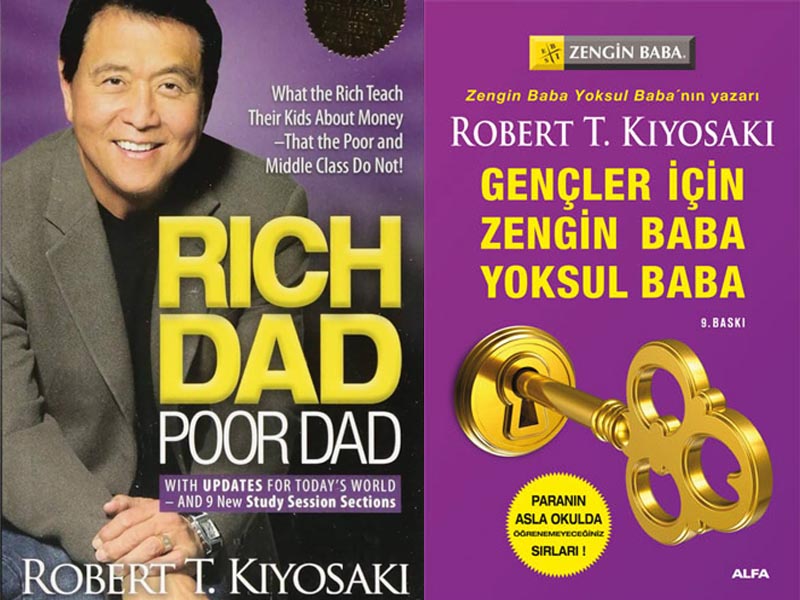
Rich Dad Poor Dad Book Summary: The Ultimate Guide to Financial Freedom. Master the art of making money work for you. Key lessons from Robert Kiyosaki on financial literacy: What is the difference between assets and liabilities? How to escape the Rat Race?
Book Details: At a Glance
| Feature | Detail |
| Author | Robert Kiyosaki |
| Core Themes | Financial Literacy, Cash Flow, Investing |
| Key Concepts | Assets vs. Liabilities, Passive Income, The Rat Race |
| Genre | Personal Finance |
Two Dads, Two Different Mindsets
Kiyosaki explains the financial world through two dominant figures in his life:
-
Poor Dad (Biological Father): Highly educated, a government official, and a salaried employee. He says, “Study hard, get a job at a good company, and stay secure.”
-
Rich Dad (Friend’s Father): A high-school dropout but a financially brilliant entrepreneur. He says, “Build your own business, take risks, and make money work for you.”
The Biggest Misconception: Asset or Liability?
Kiyosaki’s most revolutionary teaching is that your home or car is often not an “asset.”
-
Asset: Anything that puts money into your pocket (Stocks, rental real estate, royalties).
-
Liability: Anything that takes money out of your pocket (Mortgage, car loans, credit card debt).
Critical Lesson: The rich focus on building their asset column, while the poor and middle class accumulate liabilities that they mistake for assets.
What is the Rat Race?
Most people are trapped in this cycle: Go to school -> Get a job -> Pay bills -> Work harder to earn more -> Increase spending.
The only way to escape this cycle is to ensure your passive income (money earned without active work) exceeds your monthly expenses.
The 4 Pillars of Financial Literacy
To become wealthy, high income isn’t enough; you need financial intelligence:
-
Accounting: Understanding the language of numbers.
-
Investing: The strategy of money making money.
-
Understanding Markets: The balance of supply and demand.
-
Law: Knowing tax advantages and legal protection.
Understanding Cash Flow: Rich vs. Middle Class
-
Poor & Middle Class Cash Flow: Income (Salary) -> Goes to Taxes, Rent, and Debt. Money flows directly out.
-
Rich Cash Flow: Income -> Assets (Real Estate, Stocks) -> These assets generate new income -> This income pays for luxury expenses.
The Golden Rule: Buy your luxuries with the cash flow generated by your assets, not with your own labor.
The Power of Corporations: The Biggest Secret
Rich people use legal structures—corporations—to protect their wealth. Kiyosaki explains the difference:
-
Employee Cycle: Earn -> Pay Taxes -> Spend.
-
Business Owner Cycle: Earn -> Spend (Deduct Expenses) -> Pay Taxes.
Detailed Key Takeaways
A. Mindset & Psychology
-
Manage Emotions: Most people are driven by “Fear” and “Greed.” Use logic, not emotions, to make financial decisions.
-
The Art of Questioning: Instead of saying “I can’t afford it,” ask “How can I afford it?” This forces your brain to find solutions.
-
Personal Discipline: Follow the “Pay Yourself First” rule. Set aside money for investments before paying your bills.
B. Career & Growth
-
Work to Learn, Not to Earn: Choose jobs based on the skills you can acquire (sales, marketing, accounting), not just the salary.
-
The Illusion of Job Security: A job is a temporary solution. True security comes from an asset column that generates income.
C. Investment Strategy
-
Manage Risk, Don’t Avoid It: Investing isn’t risky; being financially illiterate is.
-
Don’t Fear Mistakes: In the real world, those who learn from their mistakes are the ones who succeed.
-
Delay Gratification: Build your assets first. Let them pay for your big house or luxury car later.
9. Strategic Cash Flow Table
| Character | Income Source | Expense Source | Result |
| Poor | Salary | Rent, Food, Basic Debt | Zero Savings |
| Middle Class | Salary | Mortgage, Car Loan, Credit Cards | Debt Cycle |
| Rich | Investments (Rent, Dividends) | Low Expenses | Growing Wealth |
10. The 3-Step Plan for Financial Freedom
-
Freeze Expenses: Do not raise your standard of living immediately as your income increases.
-
Reduce Liabilities: Get rid of “bad debt” like credit card balances.
-
Invest in Assets: Direct every spare dollar into assets (stocks, real estate, small businesses) that work for you 24/7.
Harika bir fikir! Makalenin bu “Derin Çıkarımlar” (Deep Insights) kısmı, okuyucunun kitaptan alacağı gerçek değeri özetlediği için İngilizce versiyonunda çok profesyonel duracaktır.
İşte “Rich Dad Poor Dad” derslerinin detaylı İngilizce çevirisi:
Detailed Takeaways from Rich Dad Poor Dad
The lessons from Robert Kiyosaki are powerful enough to change not just your wallet, but your entire worldview. Here is a detailed breakdown of the financial freedom philosophy:
1. Mindset and Psychology Insights
-
Emotional Management: Most people are driven by “Fear” and “Greed.” Fear of losing money keeps you in a secure but low-paying job; greed drives you to spend every penny on luxuries. To become wealthy, you must learn to think with your logic, not your emotions.
-
The Art of Questioning: Your mind is like a muscle. When you say “I can’t afford it,” your brain stops working. When you ask “How can I afford it?” your brain starts looking for opportunities and solutions.
-
Personal Discipline: Financial success begins with discipline. Kiyosaki calls this the “Pay Yourself First” rule. Set aside money for investment before paying your bills. If you lack enough for bills at the end of the month, use that pressure as motivation to generate extra income.
2. Financial Literacy Insights
-
Asset vs. Liability Distinction: For something to be an asset, it must “put money in your pocket.” Your primary residence is technically a liability because it takes money out of your pocket through taxes, maintenance, and mortgage payments. Real assets include stocks, bonds, rental properties, and intellectual property.
-
The Power of Cash Flow: It’s not about how much you make, but how much you keep and how hard that money works for you. The rich escape the “Rat Race” by purchasing assets that generate continuous cash flow.
-
Tax Intelligence: A salaried employee earns, gets taxed, and lives on what remains. A business owner earns, spends (investments and expenses), and is taxed on what remains. This legal difference is the ultimate key to wealth accumulation.
3. Career and Development Insights
-
Work to Learn: When looking for a job, don’t ask “How much will I get paid?” but rather “What can I learn here?” Learning core business skills like sales, marketing, and accounting is far more valuable in the long run than any single paycheck.
-
Specialization vs. General Knowledge: “Poor Dad” advocates for becoming highly specialized in one field. “Rich Dad” advises learning a little bit about every system and hiring experts to manage those systems for you.
-
The Illusion of Job Security: Having a job is not secure; it is only a temporary solution to a long-term problem. True security comes from owning an asset column that generates income regardless of your employment status.
4. Investment and Strategy Insights
-
Manage Risk, Don’t Avoid It: Investing isn’t risky; being financially illiterate is. Once you have the knowledge, you can see the level of risk and manage it effectively.
-
Don’t Fear Mistakes: The school system punishes mistakes, but the real world rewards those who learn by doing. Financial mistakes contain the most valuable lessons.
-
Delay Gratification: Most people upgrade their lifestyle as soon as their income rises. The rich build their asset column first. Once the assets generate enough cash flow, they buy luxuries using the “earnings from the assets.”
The Financial Freedom Formula (Summary):
-
Keep your expenses low.
-
Pay yourself first.
-
Avoid taking on debt for liabilities (consumption).
-
Accumulate real assets that generate passive income.
-
Invest continuously in your financial education.