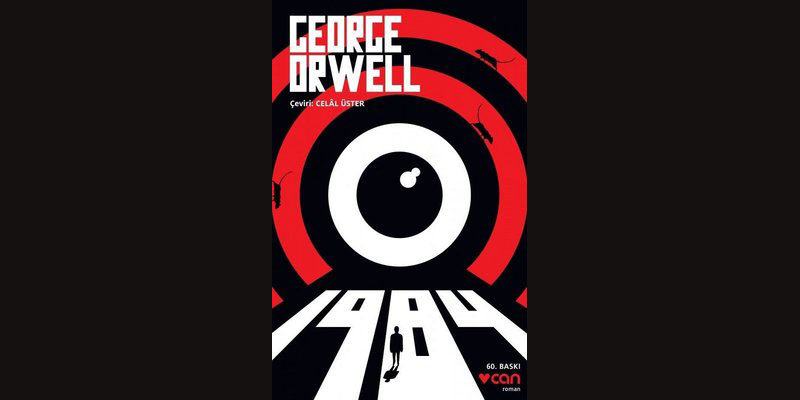
1984 Book Summary: Big Brother is Watching You
“Who controls the past controls the future: who controls the present controls the past.” George Orwell’s 1949 masterpiece is more than just a dystopian novel; it is a haunting warning about the fragility of truth and freedom. In the world of 1984, privacy is extinct, and even a “wrong” thought can lead to your disappearance. Let’s dive deep into the world of Winston Smith and the terrifying reign of the Party.
| Feature | Detail |
| Title | 1984 (Nineteen Eighty-Four) |
| Author | George Orwell |
| Main Themes | Totalitarianism, Surveillance, Reality Manipulation |
| Key Concepts | Big Brother, Thought Police, Newspeak, Doublethink |
| Published | 1949 |
The World of Oceania
The story is set in London, the chief city of Airstrip One, a province of the superstate Oceania. The world is divided into three constantly warring states: Oceania, Eurasia, and Eastasia.
-
The Party (Ingsoc): The ruling body led by the enigmatic Big Brother, whose face is plastered on posters everywhere with the caption: “Big Brother is Watching You.”
-
The Ministries: Ironically named departments that do the exact opposite of their titles. The Ministry of Truth rewrites history, while the Ministry of Love is a center for torture and brainwashing.
Psychological Manipulation: Newspeak and Doublethink
Orwell introduces two terrifying concepts that define how the Party controls the human mind:
-
Newspeak: A controlled language designed to limit the range of thought. If there is no word for “freedom,” the concept of freedom will eventually cease to exist.
-
Doublethink: The ability to hold two contradictory beliefs in one’s mind simultaneously and accept both of them. (e.g., “War is Peace,” “Freedom is Slavery,” “Ignorance is Strength”).
Winston’s Rebellion and Julia
The protagonist, Winston Smith, works at the Ministry of Truth, where his job is to “rectify” historical records. His quiet rebellion begins with a forbidden diary and grows into a passionate affair with Julia, a fellow Party member. In a world where the Party tries to eliminate all human emotions except loyalty to Big Brother, their love is the ultimate act of political defiance.
Room 101: The Death of the Soul
Winston’s journey takes a dark turn when he is betrayed by O’Brien, a man he thought was a fellow rebel. He is taken to the Ministry of Love to be “cured.”
-
Room 101: This room contains “the worst thing in the world,” which varies from person to person. For Winston, it is rats.
-
The Final Betrayal: Faced with his ultimate fear, Winston screams, “Do it to Julia! Not me!” At that moment, his spirit is broken. He has betrayed the only person he loved.
1984 in the Modern World: 5 Key Lessons
-
Digital Surveillance: From “Telescreens” to smartphones. Today, our data and locations are tracked more than ever.
-
Post-Truth Era: The manipulation of facts and “fake news” mirror the Ministry of Truth’s daily operations.
-
Echo Chambers: The narrowing of public discourse and “cancel culture” can be seen as a modern form of Newspeak.
-
Social Media Outrage: Modern “online lynchings” share a resemblance with the Party’s “Two Minutes Hate.”
-
The Loss of Objective Truth: Orwell reminds us that freedom is the right to say that 2+2=4.
FAQ
-
How does 1984 end? Winston is successfully brainwashed. The novel ends with the chilling sentence: “He loved Big Brother.”
-
Is Big Brother a real person? It is never confirmed. He is likely a mythical figure created by the Party to act as a focus for the people’s love and fear.
1984’s Messages for Today: Is Big Brother Now in Your Pocket?
George Orwell’s world of Oceania, conceived decades ago, bears haunting similarities to the realities of our digital age. Here are 5 critical lessons 1984 offers to the modern world:
1. From Telescreens to Smartphones: Voluntary Surveillance
In Orwell’s novel, Telescreens monitored people by force. Today, we “voluntarily” share our locations, shopping habits, and private conversations through smart devices and social media. The surveillance society Orwell feared now operates far more sophisticatedly through algorithms and big data mining.
2. Newspeak and the “Post-Truth” Era
The Party limited thought by reducing vocabulary. Today, character limits on social media, “cancel culture,” and echo chambers (where we only hear our own opinions) are narrowing our language and discourse. The rise of “fake news” and the manipulation of facts feel like a modern-day reflection of Orwell’s Ministry of Truth.
3. The Continuous Rewriting of History
In 1984, the past was modified daily to suit the Party’s interests. In the digital world, the ability to delete content with one click, the manipulation of internet archives, and “digital amnesia” make it increasingly difficult to preserve our collective societal memory.
4. Two Minutes Hate and Social Media Lynchings
The Party organized “Two Minutes Hate” sessions to direct the people’s rage toward a common enemy. Today, social media lynch cultures, hashtag attacks, and polarized masses represent the modern equivalent—allowing individuals to vent their anger uncontrollably at a specific target.
5. “2+2=5”: The Loss of Objective Truth
Orwell tells us that the ultimate guarantee of freedom is the right to say that “2+2=4.” If an ideology or an algorithm forces us to accept the opposite of what is obvious, our individual minds have been conquered. In an age of information overload but scarce truth, standing up for objective reality is the ultimate act of rebellion.
“Which modern technology or platform do you think resembles Big Brother the most today? Let’s discuss in the comments!”