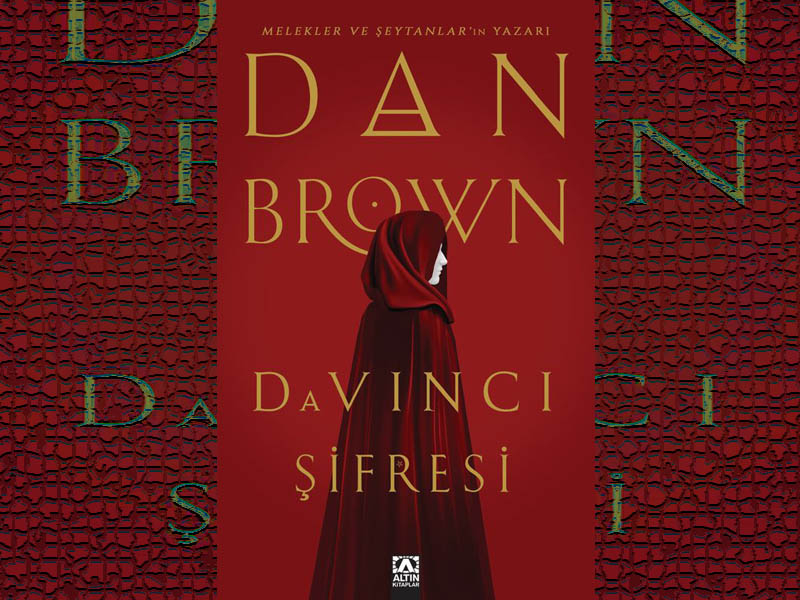
The Da Vinci Code Summary: A Quest for Symbols and Secrets. Here isthe detailed English summary of Dan Brown’s international bestseller, “The Da Vinci Code.” This novel is a high-stakes thriller that blends art history, symbology, and religious conspiracy theories.
The Da Vinci Code: A Quest for Symbols and Secrets
“A thousand-year-old secret of the Priory of Sion is revealed through a murder in the Louvre Museum.”
1. The Murder and the Cryptic Message
The story begins with the brutal murder of Jacques Saunière, the curator of the Louvre Museum in Paris. Before dying, Saunière spends his final moments arranging his body and surroundings into a series of complex symbols to leave a message.
-
Robert Langdon: A Harvard Professor of Religious Symbology who is in Paris for a lecture. He is summoned to the museum as the prime suspect because his name was found in Saunière’s final notes.
-
Sophie Neveu: A talented police cryptologist and Saunière’s estranged granddaughter. She realizes her grandfather left the clues specifically for her and Langdon to find, knowing the police would misinterpret them.
2. The Trail of Clues: Da Vinci’s Masterpieces
While fleeing from the French police (the “DCPJ”), Langdon and Sophie follow a trail of riddles hidden within the works of Leonardo da Vinci.
-
The Mona Lisa and The Virgin of the Rocks: Clues are hidden behind and within these famous paintings. The novel claims Da Vinci was a Grand Master of a secret society called the Priory of Sion, which guarded a secret that could shatter the foundations of Christianity.
-
The Cryptex: They discover a “cryptex”—a portable vault designed by Da Vinci that can only be opened with a password. Inside is believed to be the ultimate map to the Holy Grail.
3. The True Meaning of the Holy Grail
The most controversial twist in the novel is the redefinition of the Holy Grail. Rather than a “cup” used at the Last Supper, Langdon and his allies argue it is a lineage.
-
Sang Real (Royal Blood): The “Grail” refers to Mary Magdalene, who the book claims was the wife of Jesus Christ and the mother of his child. The “Holy Grail” is the secret of this sacred bloodline and the “Sacred Feminine” that the Church has allegedly suppressed for centuries.
-
Opus Dei and Silas: A conservative Catholic sect (Opus Dei) and their albino monk assassin, Silas, hunt Langdon and Sophie to destroy the evidence of this bloodline, fearing it would destroy the Church’s authority.
4. Betrayal and the Final Revelation
To solve the final riddles, the duo seeks help from Sir Leigh Teabing, a wealthy Grail historian. However, it is eventually revealed that Teabing is “The Teacher”—the mastermind who orchestrated the murders to force the Priory to reveal the secret to the world.
-
Rosslyn Chapel: The chase moves from Paris to London and finally to Rosslyn Chapel in Scotland.
-
The Revelation: Sophie discovers the truth about her own family—she is actually a descendant of the Merovingian bloodline, a direct descendant of Jesus and Mary Magdalene.
📊 Key Conflict and Factions
| Faction / Entity | Primary Goal | What They Represent |
| Priory of Sion | To protect the secret of the bloodline. | Esoteric knowledge and the Sacred Feminine. |
| Opus Dei (Silas) | To keep the secret hidden at all costs. | Institutional dogma and radical faith. |
| Leigh Teabing | To expose the secret to the public. | Obsession with truth and ultimate betrayal. |
| Robert Langdon | To solve the mystery and stay alive. | Academic rationalism and intellectual curiosity. |
💡 Literary and Cultural Impact
Dan Brown’s central theme is that “History is always written by the winners.” While the Vatican heavily criticized the book for its alternative Christian history, it sparked a global fascination with symbology, the Louvre, and the hidden history of Mary Magdalene.
Here is the detailed English analysis of the symbols and “codes” hidden within Leonardo da Vinci’s “The Last Supper” as presented in The Da Vinci Code.
“The Last Supper” and the Hidden Codes
“Leonardo painted the truth in plain sight, but only for those who know how to look.”
1. Where is the Chalice? (The Holy Grail Mystery)
In traditional Christian art, the Last Supper is the moment Jesus consecrates the wine, saying, “This is my blood.” One would expect to see a single, magnificent chalice (the Holy Grail) on the table.
-
The Novel’s Claim: If you look closely at the table, there is no primary chalice in front of Jesus. Dan Brown argues this is intentional: The Holy Grail is not an object, but a person.
-
Symbolism: In ancient iconography, the chalice is a symbol for the female and the womb. By not painting a physical cup, Da Vinci was signaling that the true “Grail” was someone present at the table.
2. The Mysterious Figure to the Right of Jesus: Mary Magdalene
The figure immediately to the right of Jesus (the viewer’s left) is traditionally identified as “John the Apostle.” However, the novel asserts this figure is actually a woman.
-
Feminine Features: Robert Langdon points out that the figure has distinct breasts, a delicate jawline, and slender hands, appearing much more feminine than other contemporary depictions of John. He claims this is Mary Magdalene.
-
Complementary Colors (Mirror Image): Jesus wears a red tunic and a blue cloak. The figure next to him wears a blue tunic and a red cloak. This “mirror image” suggests they are two halves of a whole—a husband and wife.
3. The “V” and the “M” Shapes
The arrangement of the figures in the painting speaks a geometric language, according to Langdon.
-
The Sacred Feminine (V): The space between Jesus and the figure to his right (allegedly Mary Magdalene) forms a perfect “V” shape. In symbology, this is the “Chalice” symbol, representing the female womb.
-
Matrimony / Mary (M): When looking at the overall composition, the outlines of Jesus and Mary Magdalene together form a giant letter “M”. This is said to stand for “Matrimony” or “Mary Magdalene,” symbolizing their union.
4. The Threatening Hand and Saint Peter
On the left side of the painting, a mysterious hand holding a knife appears to be pointing toward the neck of the figure identified as Mary Magdalene.
-
Peter’s Knife: Peter is shown holding a dagger in a defensive or threatening posture.
-
Political Conflict: The novel argues this represents the animosity of the Church (represented by Peter, the “Rock” of the Church) toward the bloodline of Jesus (represented by Mary Magdalene) and the attempt to suppress her importance.
📊 Art History vs. The Da Vinci Code
| Element | Traditional Art History | The Da Vinci Code Claim |
| Figure to the Right | John the Apostle (often depicted as young/effeminate). | Mary Magdalene (the wife of Jesus). |
| Lack of a Chalice | Focus is on the bread and wine as a ritual (Eucharist). | The Grail is the woman sitting next to Jesus. |
| The “M” Shape | A result of compositional balance and perspective. | A symbol for “Matrimony” and “Mary.” |
| Peter’s Knife | Represents the chaos of the betrayal and Gethsemane. | The Church’s hostility toward the sacred bloodline. |
💡 Historical Reality Note
Most art historians dismiss Dan Brown’s claims as “narrative fiction.” They point out that during the Renaissance, it was a common artistic convention to depict the youngest apostle (John) as “androgynous” or “feminine” to show his purity. However, these claims have turned the fresco into one of the most discussed and visited artworks in the world.
Here is the detailed English summary of the real-life historical locations featured in The Da Vinci Code and the mysteries they hold within the narrative.
The Geography of The Da Vinci Code: Real Places and Secrets
“History is a riddle carved into the very stones of these monuments.”
1. The Louvre Museum (Paris, France)
As the starting point of the novel, the Louvre is the world’s largest art museum and serves as the “first laboratory of codes.”
-
The Grand Gallery: This massive corridor is where the curator Jacques Saunière is found murdered. In the book, the specific arrangement of Renaissance paintings acts as a map for Robert Langdon and Sophie Neveu.
-
The Inverse Pyramid (La Pyramide Inversée): Located in the underground shopping mall of the museum, this structure holds the book’s ultimate secret. Langdon believes the tip of this pyramid (representing the feminine) points directly to the final resting place of Mary Magdalene (the Holy Grail).
-
The Rose Line: The brass markers on the floor, known as “Arago Medallions,” are depicted in the novel as an ancient prime meridian passing through Paris.
2. Saint-Sulpice Church (Paris, France)
This is the church where the assassin Silas searches for the “Keystone,” the legendary map to the Holy Grail.
-
The Gnomon (Sundial): There is an actual brass strip and an obelisk on the floor of the church. The novel claims this line is the “Rose Line” and that the church was built over a pagan temple.
-
Fact vs. Fiction: The church administration had to release a statement after the book’s success, explaining that the “P” and “S” in the windows (which the book claims stand for the Priory of Sion) actually represent the patron saints Peter and Sulpice.
3. Temple Church (London, England)
When Langdon and Sophie escape to London, this is their first stop to solve the next riddle.
-
Knights Templar Headquarters: Built by the Knights Templar in the 12th century, this round church was modeled after the Church of the Holy Sepulchre in Jerusalem.
-
Recumbent Knight Effigies: The stone figures of knights on the floor are key clues in the search for the Grail. Their poses and weaponry are read by Langdon as a “coded language.”
4. Rosslyn Chapel (Scotland)
The final, most mysterious location of the novel. It is often referred to as a “Library in Stone.”
-
Crowning Symbolism: The chapel is unique because it contains Christian, Jewish, Pagan, and Masonic symbols side-by-side.
-
The Apprentice Pillar: Legend says there is a secret compartment inside this pillar. The novel suggests that the documents regarding the Holy Grail were hidden within these walls for centuries.
-
Masonic Ties: The Sinclair family, who built the chapel, had deep historical ties to the Knights Templar and Freemasonry, which strengthens the book’s conspiracy plot.
📊 Locations and Their Functions in the Novel
| Location | The Secret in the Novel | Real-World Status |
| Louvre Museum | Final tomb of the Grail (under the Inverse Pyramid). | The most visited museum in the world. |
| Saint-Sulpice | The Rose Line hiding the Keystone. | A historic Paris church with an astronomical gnomon. |
| Temple Church | Tomb riddles left by the Knights Templar. | Located in the heart of London’s legal district. |
| Rosslyn Chapel | The final fortress/vault of Grail evidence. | Scotland’s center for “hidden symbolism.” |
💡 Traveler’s Note: “Da Vinci Code Tourism”
Since the book’s release, these locations have become massive tourist hotspots with dedicated “Da Vinci” tours. However, it is important to remember that many claims (like the meaning of the “P” and “S” in Saint-Sulpice) are purely fictional. Visiting these places provides a fascinating atmosphere where history and thriller fiction collide.
Here is the English analysis of the reality behind the Priory of Sion and Opus Dei, as depicted in The Da Vinci Code versus their actual historical standing.
The Priory of Sion and Opus Dei: Fact vs. Fiction
“One protects a sacred lineage, the other tries to destroy a secret. But which one is real?”
1. The Priory of Sion (Sion Manastırı)
In the Novel: A secret society founded in 1099 that has protected documents proving the bloodline of Jesus Christ for a thousand years. Famous “Grand Masters” supposedly include Isaac Newton, Leonardo da Vinci, and Victor Hugo.
In Reality:
-
A Modern Hoax: The organization known as the Priory of Sion was actually founded in 1956 in France by a man named Pierre Plantard.
-
Forged Documents: Plantard deposited forged genealogical documents (known as the Dossiers Secrets d’Henri Lobineau) in the National Library of France to “prove” he was a descendant of French kings.
-
The Confession: During a legal investigation in the 1990s, Plantard admitted under oath that he had fabricated the entire story of a “thousand-year-old secret society.” Therefore, the claim that Da Vinci was a member is entirely fictional.
2. Opus Dei (Work of God)
In the Novel: A dark, radical, and secretive sect of the Catholic Church that employs albino monk assassins (like Silas) to protect church secrets by any means necessary, including murder.
In Reality:
-
Official Status: Founded in Spain in 1928, Opus Dei is an official part of the Catholic Church (a Personal Prelature). Most of its members are laypeople (civilians) with normal jobs, not monks.
-
The “Silas” Error: There are no “monks” in Opus Dei. Therefore, the character of Silas as a “monk assassin” is theologically and structurally incorrect.
-
Self-Mortification (The Cilice): The use of a “cilice” (a spiked chain worn around the leg) mentioned in the book is actually practiced by some “numerary” members as a form of penance. However, it is a symbolic spiritual discipline, not the bloody torture depicted in the thriller.
-
The Reaction: Upon the book’s release, Opus Dei strongly criticized its portrayal as a “criminal organization” and requested that a disclaimer be added stating the book is a work of fiction.
📊 Comparison Table: Fiction vs. Reality
| Organization | Role in the Novel | Historical Reality |
| Priory of Sion | Ancient protector of the “Sacred Lineage.” | A 1956 hoax created by a Frenchman. |
| Opus Dei | A dark force that kills to protect secrets. | A legal Church institution focusing on daily holiness. |
| Grand Masters | Da Vinci, Newton, Botticelli. | No historical evidence links these figures to the group. |
| Methods | Codes, cryptexes, and assassinations. | Education, prayer, and institutional hierarchy. |
3. Why Did So Many People Believe It?
Dan Brown’s success lies in his use of “historical semi-truths”:
-
The Knights Templar: The book mentions the Templars, who were real and did conduct excavations in Jerusalem. This factual foundation makes the lies built upon it seem more believable.
-
The “FACT” Page: By placing a page at the beginning of the book stating “The Priory of Sion… is a real organization,” Brown bypassed the readers’ natural skepticism, leading them to perceive fiction as history.
💡 Conclusion: The Power of Narrative
Even though the Priory of Sion is not a historical fact, Dan Brown transformed this imaginary organization into a global cultural phenomenon. Meanwhile, Opus Dei faced its biggest (and most negative) publicity campaign in history. Ultimately, The Da Vinci Code proves that history is made not just of facts, but sometimes of “stories that look like the truth.”
Here is the detailed English analysis of Robert Langdon’s mission in Istanbul from the novel Inferno. In this finale, Dan Brown weaves together Byzantine history, Venetian treachery, and modern science.
Inferno: The Istanbul Finale
“The traces that began in Venice find their end where East meets West.”
1. “The Sacred Wisdom of a Kneeling Blind Man”
After deciphering clues from Dante’s Divine Comedy and Botticelli’s Map of Hell, Langdon follows the trail of Enrico Dandolo, the blind Doge of Venice who led the Fourth Crusade.
-
The Clue: The phrase “Sacred Wisdom” refers to the Greek Hagia Sophia (Holy Wisdom).
-
The Tomb of Dandolo: Langdon travels to the Hagia Sophia in Istanbul. He locates the tomb of Enrico Dandolo on the upper gallery. By pressing his ear to the floor near the tomb, he hears the sound of rushing water, leading him to the final location.
2. The Basilica Cistern: “The Gilded Darkness”
The climax of the novel takes place in the Basilica Cistern (Yerebatan Sarnıcı), an ancient underground water reservoir built by Emperor Justinian I.
-
The Underwater Hell: The “gilded darkness” describes the atmosphere created by the hundreds of illuminated columns reflected in the still water.
-
The Medusa Heads: At the far corner of the cistern, two giant stone heads of Medusa (one upside down, one sideways) serve as the anchor for the mystery. The biological “bomb” was placed in the water near these ancient carvings.
3. Zobrist’s Radical Plan: Salvation Through Plague
Bertrand Zobrist, a brilliant transhumanist scientist, believes the world is on the brink of collapse due to overpopulation. He creates a virus inspired by the “Black Death.”
-
The Center of the World: Zobrist chooses Istanbul as the release point because it is a “chokepoint” between Europe and Asia. With millions of tourists passing through the city and the cistern daily, the virus would spread globally in a matter of days.
-
The Twist: Unlike a traditional bomb, the virus is contained in a water-soluble bag submerged in the cistern. As it dissolves, the virus enters the air and water supply.
4. The Major Difference: Book vs. Movie
There is a significant difference in how the story ends, which left many readers surprised:
-
In the Novel: Langdon is too late. The bag has already dissolved, and the virus has spread. However, it is not a killing virus; it is a “vector virus” that randomly sterilizes one-third of the human population to ensure long-term survival.
-
In the Movie: In a classic Hollywood ending, Langdon and the authorities manage to secure the virus at the last second, preventing it from ever being released.
📊 The Istanbul Trail of Clues
| Location | Clue / Significance | Historical Context |
| Hagia Sophia | “Kneeling Blind Man” & “Sacred Wisdom.” | A masterpiece of Byzantine and Ottoman architecture. |
| Basilica Cistern | “The Gilded Darkness” beneath the city. | A massive 6th-century underground reservoir. |
| Spice Bazaar | A point of frantic pursuit through the crowds. | The historic center of the spice and silk trade. |
| Galata Bridge | The physical link between two continents. | One of Istanbul’s most iconic symbols of connection. |
💡 Traveler’s Note: Following Langdon’s Footsteps
Following the release of Inferno, global interest in the Basilica Cistern skyrocketed. When visiting the Medusa heads today, it is impossible not to imagine the eerie silence of the water where Zobrist’s “Inferno” began.
Here is the detailed English analysis of the codes hidden within Botticelli’s Map of Hell (La Mappa dell’Inferno), the central enigma that launches Robert Langdon’s journey in Inferno.
Botticelli’s Map of Hell: The First Cipher
“The truth can only be seen through a glass, darkly.”
1. The Altered Inferno: “Cerca Trova”
When Langdon wakes up in a Florence hospital with amnesia, he finds a high-tech “Faraday pointer” in his jacket. When projected, it displays Botticelli’s famous chart of Dante’s Inferno. However, this is not the original masterpiece; it is a digitally manipulated version created by the transhumanist scientist Bertrand Zobrist.
-
The Ten-Layered Hell: While Dante’s original Hell consists of 9 circles, Zobrist’s digital version features 10 layers. This extra layer is the key to the first code.
-
Cerca Trova (Seek and You Shall Find): These words are digitally superimposed onto the map. In the real world, this phrase is famously hidden in a fresco by Giorgio Vasari in the Palazzo Vecchio, directing Langdon to his first physical destination.
2. The Malebolge Anagram
Zobrist strategically placed hidden letters within the different “bolge” (ditches) of the eighth circle of Hell. By comparing the digital map to the original Dante text, Langdon and Sienna Brooks identify the “errors” inserted by Zobrist.
-
The Letter Trail: When the letters hidden in the ten layers are collected in order, they form the string: “CATROVACER”.
-
The Solution: By rearranging these letters (an anagram), Langdon derives the Italian command “CERCA TROVA”. This confirms that the mystery is a trail of breadcrumbs leading through the history of Florence.
3. The Plague Doctor and Biological Warnings
Zobrist’s version of the map contains disturbing additions that serve as a prophecy for his biological mission.
-
The Plague Mask: Small figures wearing the long-beaked “Plague Doctor” masks are hidden in the corners of the map. This symbolizes the “Black Death” and foreshadows the modern plague—the Solon virus—that Zobrist intends to release.
-
“Turn Your Eyes to the Past”: The map includes instructions to look backward. This leads Langdon to realize that the map is a “scrambled” history, and the only way to solve it is to retrace the steps of Dante Alighieri himself.
4. The Visual Metaphor: The Funnel
The map is famously shaped like a funnel, narrowing as it descends toward the center of the Earth.
-
Geometric Hint: This downward-tapering shape serves as a visual mirror to the Basilica Cistern in Istanbul. Just as the map descends into darkness, the final secret is hidden in a “sunken palace” beneath the city streets.
-
The Global Crisis: To Zobrist, the funnel represents the “population explosion.” As the world becomes more crowded, humanity is pushed further down into the chaos and suffering depicted in Botticelli’s art.
📊 Decoding Table: The Map of Hell
| Hidden Clue | Zobrist’s Alteration | The Message / Destination |
| Number of Circles | Increased from 9 to 10. | Signals the existence of a hidden code. |
| Letters (Anagram) | CATROVACER | CERCA TROVA (Leads to Palazzo Vecchio). |
| Plague Masks | Inserted into the Renaissance art. | Warning of a modern biological pandemic. |
| Figure Alignment | Several sinners are inverted. | “Look to the past” or “Invert the logic.” |
💡 Art History Note
Botticelli’s Map of Hell is a real parchment drawing, incredibly detailed and currently kept in the Vatican Library. While Dan Brown uses it as a scientific diagram for a biological threat, in reality, it was Botticelli’s attempt to provide a literal “geographical” map for Dante’s epic poetry.