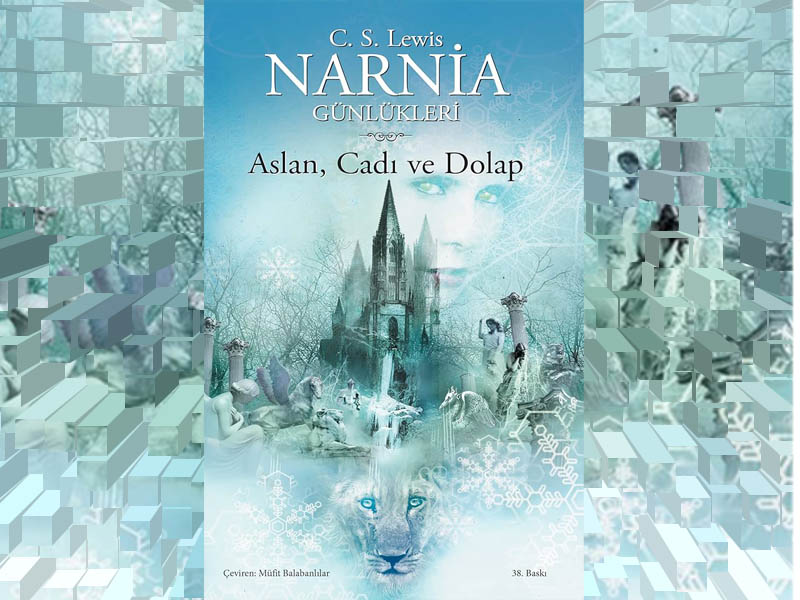
Aslan vs. The White Witch Summary : A Strategic Power Struggle . Here is the comprehensive English strategic analysis of the power struggle between Aslan and the White Witch. This is not just a battle of swords, but a complex chess match involving law, psychology, and cosmic sovereignty.
Aslan vs. The White Witch Summary: A Strategic Power Struggle
“Magic stretches deeper than the hand that wrote it.”
1. Governance Strategies: Fear vs. Loyalty
Both leaders seek absolute authority over Narnia, but their methods of maintaining power are diametrically opposed:
-
The White Witch (Tyranny and Stagnation): Her primary strategy is “The Freeze.” By trapping Narnia in an eternal winter, she uses a form of psychological warfare to eliminate hope and stall change. Her authority is enforced through her Secret Police (the Wolves) and her ability to turn dissenters into stone statues. It is a regime built on terror and the suppression of the natural cycle.
-
Aslan (Servant Leadership and Movement): Aslan’s strategy is “The Thaw.” His very presence melts the snow and brings the rivers back to life. He does not rule by intimidation but by inspiration and adherence to the “Ancient Laws” of his father, the Emperor-Beyond-the-Sea. His authority is derived from the voluntary loyalty of his subjects, who follow him out of love and a sense of belonging.
2. The Legal Battle: Deep Magic
The most critical turning point occurs at the Stone Table, where the conflict shifts from the military to the legal dimension:
-
The Witch’s Gambit: According to the “Deep Magic,” the blood of every traitor belongs to the Witch. She uses this ancient law as a legal trap to corner Aslan. If Aslan breaks the law to save Edmund, the very foundations of Narnia would crumble. She views the law strictly as a tool for retribution and vengeance.
-
Aslan’s Counter-Move: Aslan does not break the law; he fulfills it while leveraging a hidden clause. By offering himself—an innocent—in place of a traitor, he triggers the “Deeper Magic from Before the Dawn of Time.” This is a masterstroke of asymmetric strategy, using a higher law to negate a lower one, effectively checkmating the Witch through self-sacrifice.
3. Military and Psychological Superiority
The dynamics on the battlefield reflect the core philosophies of the two leaders:
-
The Witch’s Army: Composed of giants, ghouls, and dark creatures, her forces are driven by the promise of destruction and plunder. She relies on technical superiority (believing she has removed Aslan from the equation) and raw intimidation.
-
Aslan’s Army: Composed of talking animals and free creatures, they fight for liberation. While the Witch’s army is demoralized once they realize their “invincible” leader is fallible, Aslan’s army finds renewed strength in his resurrection, leading to a total psychological collapse of the enemy forces.
📊 Power Balance Matrix
| Strategic Element | The White Witch (Shadow) | Aslan (Light) |
| Source of Power | Fear, sorcery, and ownership. | Love, sacrifice, and legitimacy. |
| View of the Law | Rigid rules used for punishment. | Balance of justice and mercy. |
| Ultimate Goal | Absolute control and status quo. | Freedom and restoration of order. |
| Strategic Flaw | Hubris and ignorance of “Deeper Magic.” | Willingness to risk everything for one life. |
💡 Strategic Conclusion: The Power of Information
The White Witch’s ultimate downfall is information asymmetry. She knows the laws that benefit her (the Deep Magic) but is blind to the laws born of grace (the Deeper Magic). Aslan, as both the law-giver and the law-abider, understands that sacrifice is the ultimate disruptor of death’s power. This struggle proves that even the greatest physical or magical force cannot withstand a strategy rooted in wisdom and selflessness.
Aslan’s roar is not just a sound; it is the re-awakening of an ancient, unstoppable law.
Here is the English version of the Machiavellian analysis of the White Witch’s rule in Narnia.
The White Witch: A Study in Machiavellian Power
“It is much safer to be feared than loved.” — Niccolò Machiavelli
1. The Establishment of Fear
Machiavelli argues in The Prince that if a ruler cannot be loved (and Jadis, being an outsider from another world, certainly is not), they must ensure they are feared to prevent rebellion.
-
Petrification and Public Execution: The Witch uses her wand to turn dissenters into stone. This is not just a punishment; it is a “public spectacle” of power. By leaving the statues in her courtyard, she follows Machiavelli’s advice to make “injuries all at once” to break the spirit of the populace and keep them in a state of perpetual awe.
-
The Secret Police: The Wolves, led by Maugrim, act as the loyal “auxiliary troops” Machiavelli recommends. Through this surveillance network, she ensures that even a whisper of rebellion is snuffed out before it can grow.
2. The Strategy of the “Lion and the Fox”
Machiavelli famously stated that a prince must know how to act as both a lion (to frighten the wolves) and a fox (to recognize the traps).
-
The Fox (Cunning): Jadis does not capture Edmund through brute force initially. Instead, she exploits his internal weaknesses—greed and envy. The “Turkish Delight” and the promise of a throne are classic Machiavellian tools of manipulation to destroy an enemy from within.
-
The Lion (Coercion): When she stands before Aslan at the Stone Table, she invokes the “Deep Magic.” She attempts to weaponize the ancient laws (the ideology of the land) to force her opponent into a corner, using the law as a shield for her own cruelty.
3. Maintaining the Status Quo: The “Eternal Winter”
For a “new prince” (an occupier), maintaining order is the greatest challenge. Jadis achieves this by freezing time itself.
-
Stagnation as Control: Change often leads to revolution. Her policy of “Always winter, never Christmas” ensures that the citizens of Narnia are entirely focused on basic survival. A society that is cold, hungry, and in a state of perpetual crisis has neither the energy nor the resources to organize a sophisticated coup.
4. The Problem of Legitimacy
Machiavelli notes that ruling a conquered territory is difficult when the ruler has no natural ties to the people. Jadis is an invader from the world of Charn.
-
Destroying the Bloodline: Because she knows the prophecy that “two Sons of Adam and two Daughters of Eve” are the rightful rulers, she directs all her strategic resources toward their elimination. Since she cannot build legitimate love, she must systematically destroy any rival source of legitimacy (the Pevensie siblings).
📊 Machiavellian Principles in Jadis’s Reign
| Machiavellian Principle | Application by the White Witch | Strategic Outcome |
| Fear is Safer than Love | Turning rebels into stone statues to create a climate of terror. | 100 years of uninterrupted, though brittle, rule. |
| Breaking One’s Word | Failing to fulfill her promise of making Edmund a Prince. | Loss of Edmund’s loyalty once he realized the deception. |
| Utilizing the Law | Using “Deep Magic” to demand the blood of the traitor. | Legally forcing Aslan into a position of sacrifice. |
| Cruelty Used Well | Freezing Narnia in a single night to break initial resistance. | A long period of enforced silence and submission. |
💡 The Strategic Failure: Crossing into Hatred
Machiavelli warns that a prince must be feared but never hated. Hatred is the catalyst that turns fear into reckless rebellion. Jadis oppressed Narnia so severely that she crossed this line. The moment a viable alternative appeared (Aslan), the collective hatred of the populace turned into a tidal wave that her “Lion and Fox” tactics could no longer contain.
Jadis ruled like a perfect Machiavellian, but she failed to account for what Machiavelli called “Fortuna”—the unpredictable return of the True King.
Here is the English version of the strategic analysis regarding Aslan as the model of the “Ideal Ruler.” In the Narnian universe, Aslan is not merely a savior; he is the embodiment of the “Philosopher King” and the theological concept of “Absolute Justice.”
Aslan as the Ideal Ruler: Servant Leadership
“To rule is to serve.”
1. Legitimacy and Adherence to Ancient Law
While a Machiavellian ruler bends the law to suit their needs, an ideal ruler submits to the law to ensure its integrity.
-
The Supremacy of Law: Although Aslan is the creator and true King of Narnia, he does not break the “Deep Magic.” He could have taken Edmund back by force, but doing so would have shattered the moral foundation of Narnia. The ideal ruler values the Rule of Law above their own personal power.
-
Restoration of Natural Order: The end of winter upon Aslan’s arrival represents the ruler’s harmony with nature and universal truths. He does not establish order through artificial pressure (ice) but by releasing life (spring).
2. Sacrifice and Accountability
Aslan builds his reign not by taking from his subjects, but by giving to them.
-
Self-Sacrifice: Dying for a “traitor” like Edmund demonstrates that an ideal ruler takes the mistakes of their subjects upon themselves. This is the ultimate expression of accountability in leadership.
-
Delegation and Empowerment: Instead of ruling Narnia alone, Aslan crowns the Pevensie siblings. He trains them, empowers them, and gives them responsibility. This is a leadership model that shares and devolves power rather than centralizing it.
3. The Balance of Mercy and Justice
Aslan’s rule is neither weak-hearted softness nor cruel hardness.
-
The Just King: When Edmund repents, Aslan ensures that no one ever brings up his past again. This is a strategy of forgiveness and reconciliation to ensure social cohesion and peace.
-
Necessary Strength: Aslan is not a “tame lion.” He is decisive and powerful when fighting evil (The White Witch). However, this power is used only for defense and the restoration of justice, never for arbitrary tyranny.
4. Wisdom and Foresight
Aslan knows not just the present, but the “Time Before Dawn.”
-
The Deeper Magic: While the Witch only knows the punitive law of retribution, Aslan possesses the wisdom that love and sacrifice can defeat death itself. The ideal ruler is the one who possesses the deepest layers of knowledge.
📊 Ideal Ruler (Aslan) vs. Machiavellian Ruler
| Trait | Aslan (The Ideal Model) | The White Witch (Machiavellian) |
| Foundation of Power | Legitimacy and Love. | Fear and Tyranny. |
| View of the Law | Servant of the law. | Uses the law as a weapon. |
| Crisis Management | Sacrifices self for the people. | Sacrifices the people for self. |
| Relationship with Subjects | Liberates and empowers them. | Freezes and enslaves them. |
| Perception of Time | Eternal and cyclical (Spring). | Static and frozen (Eternal Winter). |
💡 Strategic Conclusion: Power vs. Authority
Aslan teaches us the difference between Power and Authority. The White Witch had power, but she lacked legitimacy (authority). Aslan has such immense authority that even when he is dead, his followers remain loyal to his principles. A true ruler is one who continues to lead through their values even when they are physically absent.
Aslan’s roar does not announce the victory of might, but the victory of justice and love.