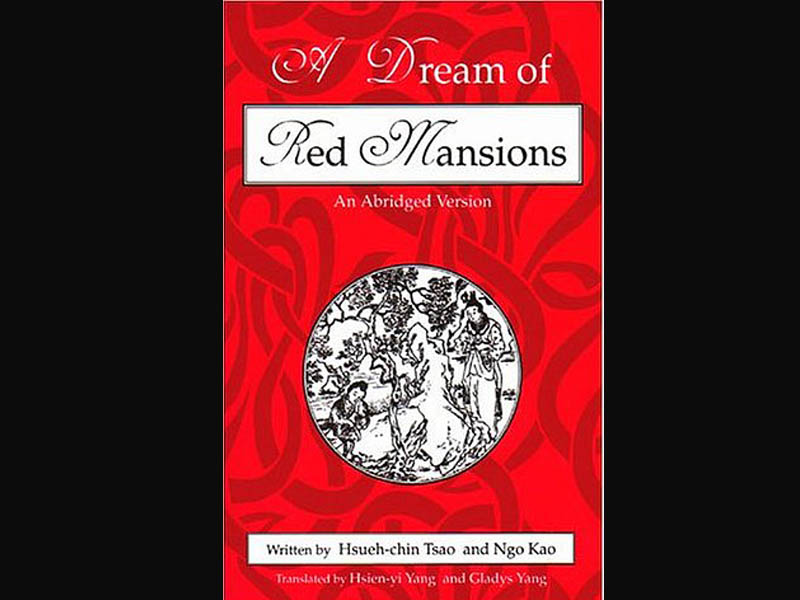
Dream of the Red Chamber Summary Ve Analysis : Grandeur, Illusion, and the Void . “When the real is taken for the unreal, the unreal becomes real.”
🔬 The Metaphysical Prelude
The novel begins with a myth: A sentient Stone, left unused by the goddess Nüwa when she repaired the sky, longs to experience the human world. A Buddhist monk and a Taoist priest take the Stone to earth, where it is born as Jia Baoyu, the heir of the noble Jia family, with a piece of jade in his mouth.
📜 Detailed Plot Summary: The Rise and Fall of the Jias
1. The Era of Splendor
The story follows the Jia Clan, a massive, wealthy family with deep imperial ties. The protagonist, Baoyu, is a sensitive young man who dislikes Confucian studies and bureaucracy, preferring the company of his female cousins and maids, whom he considers spiritually superior to men.
The family reaches its peak with the construction of the Prospect Garden, a magnificent earthly paradise where Baoyu and his cousins live a life of poetry, art, and refined leisure.
2. The Great Love Triangle
At the heart of the novel is the emotional conflict between Baoyu and his two cousins:
-
Lin Daiyu: Fragile, melancholic, and brilliantly poetic. She is Baoyu’s spiritual soulmate. However, her poor health and refusal to conform to social norms make her an “unfit” match in the eyes of the elders.
-
Xue Baochai: Intelligent, tactful, and beautiful. She represents the Confucian ideal of a “perfect wife” who understands social duty and pragmatism.
While Baoyu loves Daiyu, the family elders trick him into marrying Baochai to secure the family’s future. Daiyu dies of a broken heart at the exact moment the wedding takes place.
3. The Collapse of the Dream
The Jia family’s moral decay, extravagance, and political missteps eventually lead to their downfall. Their property is confiscated, and their titles are stripped. Realizing that the world is but a fleeting “dream,” Baoyu abandons his life of privilege to become a wandering monk.
💡 Philosophical and Strategic Analysis
1. Buddhism & Taoism: The Concept of Sunyata (Emptiness)
The central theme is the transition from Form (the Red Chamber) to Void (the Dream). The novel argues that all earthly attachments—wealth, beauty, and even love—are illusory. Baoyu’s journey is the ultimate “unlearning” of desire.
2. Confucianism vs. Individualism
The novel portrays the suffocating nature of the Confucian social hierarchy. Baoyu’s rebellion against state exams and filial duties represents the struggle for individual identity against a rigid, decaying system.
3. The Psychology of Decay
Cao Xueqin masterfully depicts how great organizations (the Jia Clan) collapse from within before they are destroyed from without. It is a study in entropy: luxury leads to laziness, which leads to corruption, which leads to inevitable ruin.
📊 Character Matrix: Symbols and Fates
| Character | Symbolizes | Ultimate Fate |
| Jia Baoyu | The Spiritual Stone / Sentience | Renunciation (becomes a monk). |
| Lin Daiyu | The Crimson Pearl Flower / Pure Emotion | Death (as a return to her spiritual form). |
| Xue Baochai | Gold / Social Conformity | A lonely, hollow marriage. |
| Wang Xifeng | Power and Ambition | Tragic downfall and loss of respect. |
💡 Modern Takeaway: The “Naval” Connection
Much like the modern teachings of Naval Ravikant, the novel suggests that “Desire is a contract you make with yourself to be unhappy until you get what you want.” Baoyu eventually breaks this contract by letting go of everything—even the “Jade” he was born with.
Dream of the Red Chamber reminds us that while the “Red Chamber” of our lives is beautiful, the “Snow” of time will eventually cover it all.
Certainly! To complete your English dossier on the Dream of the Red Chamber, here is the detailed breakdown of the Buddhist and Taoist symbols that form the spiritual skeleton of the novel.
Dream of the Red Chamber: Buddhist and Taoist Symbolism. “When truth is disguised as falsehood, falsehood becomes truth.”
1. The Monk and the Priest: The Messengers of Fate
At the very beginning of the novel, we encounter a Lame Taoist and a Scabby Buddhist Monk. They are the bridge between the mortal world and the divine.
-
Symbolism: These two figures represent “Reality” outside of human illusions. They appear at the peak of the Jia family’s splendor to warn them of their inevitable downfall.
-
The Strategic Role: They act as catalysts for Renunciation. While the world sees power and wealth, they see the “dust” and “ashes” that all things will eventually become.
2. The Precious Jade: The Burden of Attachment
The jade stone that Baoyu is born with is the central symbol of the book.
-
The Origin: It is a sentient stone left behind by the goddess Nüwa. It chose to enter the human world to experience desire and suffering.
-
Buddhist Interpretation: In Buddhism, Jade represents “Attachment” (Upādāna). Whenever Baoyu loses his jade, his mind becomes clouded and he loses his “self.”
-
The Lesson: To find true enlightenment, Baoyu must eventually discard the jade—meaning he must sever his ties to his identity, his family, and his earthly desires.
3. The Crimson Pearl Flower: The Debt of Tears
The relationship between Baoyu and Daiyu is explained through a Taoist metaphysical debt. In their past lives, Baoyu (the Stone) watered a flower (the Crimson Pearl) with morning dew every day.
-
The Debt of Tears: The flower takes human form (Daiyu) to repay this debt. She says, “I have no water to give him back; I have only my tears.”
-
Taoist Philosophy: This reflects the concept of Yuanfen (destiny/affinity) and the natural balance of debt and repayment. Daiyu’s constant weeping is not just sadness; it is a cosmic “paying back” of the life-giving dew she received.
4. The Magic Mirror: Desire vs. Reality
The episode of the “Two-Sided Mirror” is the most direct Buddhist/Taoist metaphor for human life.
-
The Front Side: Shows a beautiful woman, representing Desire (Kāma).
-
The Back Side: Shows a skeleton, representing Reality and death.
-
The Warning: The Taoist tells the character Jia Rui to only look at the skeleton to save his life. However, Jia Rui is seduced by the front side and dies.
-
Meaning: Human beings are constantly distracted by the “Beautiful Illusion” (the front of the mirror) and refuse to face the “Ultimate Truth” (impermanence).
5. The Grand Final: The Snow and the Void
The closing scene, where Baoyu disappears into the snowy horizon wearing a red cloak, is the ultimate realization of Sunyata (Emptiness).
-
Taoist “Wu Wei”: Baoyu reaches a state of “Non-Action.” He no longer tries to fix the world or his family; he simply flows back into the Tao.
-
The Void: The “Red” (passions/wealth) is swallowed by the “White” (purity/void). This is the transition from a “Dream” to “Awakening.”
📊 Summary of Spiritual Symbols
| Symbol | Earthly Perception (Illusion) | Spiritual Truth (Reality) |
| The Red Chamber | A place of luxury and status. | A temporary shelter for the soul. |
| The Jade | A sign of nobility and luck. | A weight that prevents enlightenment. |
| The Garden | A paradise on earth. | A “Maya” (illusion) that must crumble. |
| The Tears | Signs of romantic tragedy. | The fulfillment of a spiritual debt. |
By understanding these symbols, we see that the story of the Jias is not just a tragedy—it is a map to spiritual liberation.
To complete your comprehensive English analysis, here is the breakdown of the Confucian perspective. While Buddhism and Taoism focus on the individual’s spiritual escape, Confucianism focuses on the family’s social collapse.
The Fall of the Jias: A Confucian Moral Failure. “To put the world in order, we must first put the family in order.”
1. Filial Piety (Xiao) vs. Individual Rebellion
The bedrock of Confucianism is Xiao (Filial Piety)—the absolute duty of a son to honor his father and elevate the family name through civil service and bureaucracy.
-
The Conflict: Baoyu rejects the “Imperial Examinations” and refers to Confucian officials as “silver-fish” (parasites). His refusal to study the classics is not just laziness; it is a fundamental strike against the lineage’s continuity.
-
The Strategic Error: By failing to produce a traditional heir who respects the hierarchy, the Jia family loses its “Social Capital,” making them vulnerable to political enemies.
2. Ritual (Li) vs. True Virtue (Ren)
Confucianism teaches that Li (External Rituals) must be rooted in Ren (Internal Benevolence).
-
The Failure: The Jia family is obsessed with Li. They host the most expensive funerals and elaborate banquets to maintain the appearance of nobility. However, behind closed doors, they lack Ren. There is cruelty toward servants, corruption, and moral decay.
-
Analogy: They built a magnificent “house of cards.” It looked perfect according to the rituals, but it had no structural integrity (virtue) to hold it up when the wind of political change blew.
3. The Distortion of the “Middle Way” (Zhongyong)
Confucianism advocates for the Middle Way—a life of moderation, balance, and emotional regulation.
-
The Imbalance: The characters in the Jia household are defined by extremes. Wang Xifeng is consumed by extreme ambition and greed; Lin Daiyu is consumed by extreme melancholy; Jia Zheng (the father) is consumed by extreme severity.
-
The Result: Without “Zhongyong” (Balance), the family system enters a state of Luan (Chaos). In Confucian thought, once a family loses its internal balance, its external downfall is inevitable.
4. The Mandate of Heaven and Political Decay
In the Confucian worldview, a family’s prosperity is linked to their service to the Emperor and their moral standing.
-
The Loss of Favor: The Jias relied on “Guanxi” (Connections/Nepotism) through their daughter in the Imperial Palace rather than on merit. When their moral decay reached a tipping point, they lost the “Mandate” of the Emperor’s favor.
-
Modern Insight: This is a classic case of Organizational Entropy. The Jias focused on maintaining status rather than renewing utility.
📊 Summary: Confucian Ideals vs. Jia Reality
| Confucian Ideal | The Jia Household’s Reality | Strategic Outcome |
| Filial Piety (Xiao) | Baoyu’s rebellion and lack of discipline. | Breakdown of authority and future leadership. |
| Propriety (Li) | Shallow extravagance and hollow ceremonies. | Financial ruin and moral hypocrisy. |
| Benevolence (Ren) | Cruelty, greed, and internal betrayals. | Loss of loyalty and internal unity. |
| Meritocracy | Reliance on imperial favors and nepotism. | Total vulnerability to political purges. |
In the end, the Jia family’s story is a warning: A society or a family that values the mask of ritual over the substance of virtue is destined to become a dream.
The final scene of the “Monk Under the Snow” is one of the most visually stunning and philosophically profound endings in world literature. It represents the moment where the thousands of pages of grandeur, love, and suffering finally dissolve into “Nothingness.”
Here is the detailed English analysis of this iconic finale:
The Monk Under the Snow: The End of Illusion. “When all is said and done, only a vast, white emptiness remains.”
1. Description of the Scene
At the end of the novel, after his family has been disgraced and his soulmate, Daiyu, has passed away, Baoyu does something unexpected: he sits for the Imperial Examinations and passes with high honors. Just as the family thinks he will return to save their fortune, he disappears.
The climax occurs when his father, Jia Zheng, is traveling by boat. On a cold, snowy riverbank, he spots a figure in the distance. It is a monk, barefoot, wearing a striking crimson cloak. The monk bows to Jia Zheng three times in silence. Before the father can reach him, the monk turns and walks away with a Buddhist monk and a Taoist priest, vanishing into the blinding white horizon of the snowstorm.
2. The Contrast of Red and White
The color palette of this scene is highly symbolic:
-
Crimson (The Cloak): Represents Baoyu’s worldly past, the blood and tears shed, the passion of his love for Daiyu, and the “Red Chamber” of his youth.
-
White (The Snow): Represents purity, death, and the Buddhist concept of Sunyata (Emptiness/The Void).
-
The Meaning: As the red cloak disappears into the white snow, it symbolizes the “Red Chamber” (worldly desires) being swallowed by the “Dream” (the ultimate transience of reality).
3. Paying the Confucian Debt
Why did Baoyu take the exams if he intended to leave?
-
Fulfilling Duty: By passing the exams, Baoyu fulfills his Confucian duty (Filial Piety) to his father and his family name. He proves he could have been the son they wanted.
-
Ultimate Freedom: By paying his “social debt” first, his departure becomes a true act of liberation rather than a simple escape. He leaves the world only after he has settled his accounts with it.
4. Philosophical Realization
A. The Return to the Tao
Baoyu is no longer a son, a husband, or a nobleman. He has returned to his original state—the Stone. He has achieved Wu Wei (Non-Action), letting go of the need to control or fix the tragedy of his family.
B. The Awakening
In Buddhism, a “Buddha” is one who has awakened from the dream of existence. Baoyu’s silent bow to his father is a farewell to the dream. He chooses the “Skeleton” side of the mirror over the “Beautiful Woman” side.
📊 Summary of the Final Transition
| Element | Symbolic Meaning | The Character’s Transformation |
| Falling Snow | Time and Oblivion | The erasing of all earthly sorrow and history. |
| Bare Feet | Simplicity and Humility | The total rejection of material wealth. |
| The Vanishing Boat | The Journey of Life | Moving from one shore (Illusion) to the other (Truth). |
| Silence | Absolute Knowledge | Reaching the point where words are no longer necessary. |
This scene asks the reader a final question: “What are the ‘Red Chambers’ in your own life, and are you ready for the snow that will eventually cover them?”