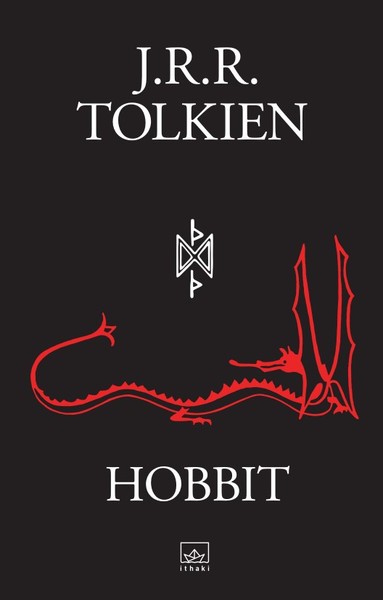
The Hobbit book summary and analysis. Here is the comprehensive English summary and strategic analysis of J.R.R. Tolkien’s masterpiece, The Hobbit. This analysis highlights Bilbo Baggins’ transition from a comfort-seeking homebody to a strategic hero.
The Hobbit: Bilbo Baggins’ Epic Journey and Analysis
“The world is not in your books and maps, it’s out there.” — Gandalf
🔬 The Beginning: Invasion of the Comfort Zone
Bilbo Baggins is a Hobbit who lives by a simple philosophy: peace, quiet, and frequent meals. His life in the Shire is perfectly predictable until the wizard Gandalf marks his door. Suddenly, thirteen dwarves, led by Thorin Oakenshield, arrive at his home. They want to hire Bilbo as a “burglar” to help them reclaim their ancestral treasure from the dragon Smaug at the Lonely Mountain.
Though Bilbo initially refuses, his adventurous “Took” side awakens. He leaves his comfortable hobbit-hole the next morning, forgetting even his handkerchief, to embark on a journey that will change Middle-earth forever.
📜 Key Milestones of the Journey
1. Trolls and the First Trial
Early in the journey, Bilbo attempts to “burgle” a purse from three massive trolls. He fails miserably and is captured, followed by the dwarves. Gandalf saves them by tricking the trolls into staying out until dawn, turning them to stone.
-
The Reward: They find the legendary elven blades in the troll cave. Bilbo finds his sword, Sting. This is his first physical step toward heroism.
2. Riddles in the Dark: The Turning Point
While lost in the goblin tunnels, Bilbo finds a cold, gold ring on the floor—the One Ring. He then encounters the creature Gollum. They engage in a high-stakes “Riddle Game.” Bilbo wins through wit and luck, discovers the Ring’s power of invisibility, and—most importantly—chooses to show mercy to Gollum.
-
Philosophical Insight: This act of pity becomes the most important decision in the history of Middle-earth.
3. Mirkwood and the Spiders
Without Gandalf’s help, Bilbo must save the dwarves from giant spiders. Using his invisibility and his sword, he defeats the creatures. This is the moment Bilbo gains true self-confidence. He is no longer a “guest” but the strategic leader of the group.
4. Smaug and the Lonely Mountain
Bilbo enters Smaug’s lair alone. He uses riddles to converse with the dragon, discovering Smaug’s physical weakness (a missing scale on his chest). However, he also witnesses the “Dragon-sickness”—the corrupting influence of greed—taking hold of Thorin.
5. The Battle of Five Armies and the Return
After Smaug is defeated, a war breaks out over the treasure. Bilbo tries to prevent the conflict by using the Arkenstone as a diplomatic tool. Though a massive battle ensues, peace is eventually restored. Bilbo returns to the Shire with a small portion of treasure but an immense wealth of experience.
💡 Strategic and Philosophical Analysis
1. Comfort Zone vs. Personal Growth
Bilbo’s journey is a classic study in self-actualization. At home, he was “safe” but “incomplete.” By facing hunger, fear, and war, he discovered a capacity for courage he never knew he had.
-
Modern Connection: As Naval Ravikant suggests, choosing the difficult path leads to a simpler, more fulfilled life.
2. The Power of “Small Things”
Tolkien’s core philosophy is that the great events of the world are not moved by the powerful, but by the small and seemingly insignificant. Bilbo has no magic or great strength; he only has his loyalty, his wit, and his integrity.
3. Ownership and “Dragon-Sickness”
Smaug represents the ultimate trap of greed. He hoards wealth he cannot use. In contrast, Bilbo treats the treasure as a tool for peace (the Arkenstone) or a means to a comfortable life, never letting it own his soul.
-
Stoic Connection: Like Marcus Aurelius, Bilbo realizes that character is the only true possession.
📊 Character Transformation Matrix
| Feature | Bilbo at the Start | Bilbo at the End |
| Primary Fear | Missing tea time / Discomfort | Losing friends / Failure of character |
| Weaponry | None (Only politeness) | Sting and the One Ring |
| Motivation | Social pressure / Obligation | Responsibility / Love of adventure |
| Status | A respectable “Nobody” | A world-traveler and “Elf-friend” |
Building on the early stages of Bilbo’s transformation, here is the detailed breakdown of the “Trolls and the First Trial” section in English. This is the moment where Bilbo’s theoretical title as a “burglar” meets the harsh reality of the wild.
Trolls and the First Trial: The Failure of Theory
“I am a good burglar, or so they say.” — Bilbo Baggins (Before the trial)
👹 The Encounter: Tom, Bert, and William
Shortly after leaving the Shire, the company finds themselves cold, hungry, and wet. They spot a light in the distance, and the Dwarves—relying on Bilbo’s supposed professional skills—send him to investigate. Bilbo finds three massive Trolls—Tom, Bert, and William—complaining about their diet of mutton while sitting around a fire.
1. The Amateur Thief
Bilbo wants to prove his worth. Instead of simply scouting and returning to the group, he decides to pick the pocket of one of the trolls. However, the trolls possess “troll-purses” that are enchanted. When Bilbo reaches for one, the purse squeaks a warning, and he is immediately captured.
2. The Capture of the Dwarves
As the Dwarves come to rescue Bilbo one by one, the trolls are prepared. They trap each dwarf in a sack. The trolls then begin a long, gruesome debate on how to cook them: should they be roasted, boiled, or simply sat upon?
🧙 Gandalf’s Strategic Deception
Just as hope seems lost, Gandalf returns. He does not use fire or magic in a direct attack; instead, he uses intelligence and disinformation.
-
Voice Mimicry: Gandalf hides in the shadows and mimics the voices of the trolls. He insults William using Tom’s voice and contradicts Bert using William’s voice.
-
The “Divide and Conquer” Tactic: The trolls, being slow-witted and argumentative, begin to fight among themselves. They lose track of time while arguing over whose insult was worse.
-
The Dawn Trap: Gandalf’s goal is to delay them until the sun rises. In Tolkien’s lore, Trolls must be underground before dawn, or they turn to stone. As the first ray of light hits them, the three trolls are frozen forever as statues.
💎 The Reward: Ancient Blades
After the trolls are turned to stone, the group finds their cave. This is not just a lair but a storehouse of ancient treasures from the Fall of Gondolin. Here, the company finds the tools that will define their heroism:
-
Glamdring and Orcrist: Gandalf and Thorin take these legendary Elven swords, famous for glowing when Orcs are near.
-
Sting: Bilbo finds a small Elven dagger. To a Hobbit, it is the size of a short sword. This blade becomes Bilbo’s primary tool of defense and a symbol of his emerging courage.
💡 Strategic and Philosophical Lessons
1. Skills vs. Pretence
Bilbo tried to act like a “professional burglar” from a book, which nearly cost everyone their lives. James Clear would argue that you cannot skip the “identity” phase of a habit. Bilbo had the title of a burglar but not the systems or the experience.
-
Lesson: Do not take uncalculated risks based on an ego-driven need to prove yourself.
2. Information Warfare
Gandalf proves that words are more powerful than swords. By sowing discord among the enemy, he neutralized a physically superior force without swinging a staff.
-
Lesson: In any conflict, the one who controls the narrative and the timing wins.
3. The Utility of Tools
The discovery of Sting represents the “Call to Arms.” In Stoic terms, Bilbo has now accepted his fate (Amor Fati). He is no longer just a passenger; he is an armed participant in his own destiny.
📊 Summary Matrix: The Troll Trial
| Event | Error / Strategy | Strategic Takeaway |
| Picking the Pocket | Ego-driven overextension | Mastery takes time; don’t rush the “First Trial.” |
| Troll Argument | Internal Conflict (Sown by Gandalf) | A house divided against itself cannot stand. |
| Turning to Stone | Natural Vulnerability | Every “giant” problem has a fatal weakness (Timing). |
The Troll incident was Bilbo’s first “bruise” on the road to wisdom. It taught him that being a hero requires more than a title—it requires a sharp mind and even sharper timing.
Building on Bilbo’s early trials, the encounter with Gollum is the most significant psychological and narrative turning point in The Hobbit. Here is the detailed English analysis of “Riddles in the Dark.” Riddles in the Dark: The Duel of Wits “What has it got in its pocketses?” — Gollum
🌑 The Setting: The Roots of the Mountain
After getting lost in the goblin tunnels, Bilbo wakes up in complete darkness on the edge of a subterranean lake. His hand lands on a small, cold metal object—the One Ring. He slips it into his pocket without a second thought. Soon, he is confronted by Gollum, a creature of “slimy” shadows who lives on a lonely island in the middle of the lake.
1. The Deadly Game: Riddles
Gollum is curious and hungry. Instead of attacking immediately, he challenges Bilbo to a game of riddles—an ancient tradition of Middle-earth.
-
The Stakes: If Bilbo wins, Gollum must show him the way out. If Gollum wins, he eats the Hobbit.
-
The Interaction: This is not a battle of strength, but of cognitive survival. It represents the triumph of intellect over primal instinct.
2. The Turning Point: “What’s in my pocket?”
Exhausted and out of riddles, Bilbo fumbles with his pocket and asks himself aloud, “What have I got in my pocket?” Gollum mistakes this for a formal riddle. Failing to answer after three guesses, Gollum loses the game.
💍 The Discovery of Invisibility
Gollum, realizing his “Precious” (the Ring) is gone, deduces that Bilbo has it. As Gollum attacks in a rage, Bilbo accidentally slips the Ring onto his finger and realizes he has become invisible. He follows Gollum to the exit, realizing that the creature unwittingly acts as his guide.
💡 Strategic and Philosophical Analysis
1. The Power of Mercy (Stoic Self-Mastery)
At the exit, Bilbo stands invisible over Gollum. He has his sword, Sting, and could easily kill the creature to ensure his escape. However, Bilbo feels a sudden flash of pity. He sees Gollum’s miserable, lonely existence and chooses to leap over him rather than strike him.
-
Stoic Connection: Marcus Aurelius taught that “The best revenge is to be unlike him who performed the injury.” By choosing mercy, Bilbo preserves his own humanity.
-
Long-term Strategy: As Gandalf later explains, this single act of mercy eventually allows the Ring to be destroyed years later.
2. Thinking Outside the Box
Bilbo’s “What’s in my pocket?” question was a “cheat” in the eyes of the formal rules, but it was a moment of lateral thinking. When the standard systems (formal riddles) failed, Bilbo’s instinctual curiosity provided a solution.
-
Modern Connection: In Naval Ravikant’s terms, Bilbo used “Specific Knowledge”—his unique situation—to escape a zero-sum game.
3. Luck vs. Destiny
Tolkien suggests that Bilbo was meant to find the Ring, but not by its creator.
-
Lesson: Even in the darkest “tunnels” of life, being prepared with a sharp mind allows you to seize “lucky” opportunities that change your fate (Amor Fati).
📊 Summary of the Riddle Duel
| Riddle Theme | The Concept | Strategic Meaning |
| Time | “Slays kings, ruins towns…” | The ultimate Stoic reminder of impermanence. |
| Darkness | “Ends life, kills laughter…” | The external environment Bilbo had to conquer. |
| The Pocket | “What have I got…?” | The pivot from tradition to personal intuition. |
“Riddles in the Dark” transforms Bilbo from a follower into a keeper of secrets. He leaves the cave with a weapon of invisibility, but his greatest strength remains his capacity for mercy.
Building on Bilbo’s internal growth, the Mirkwood chapter represents the external manifestation of his new identity. In the darkness of the forest, Bilbo moves from being a “lucky find” to a “capable leader.” Here is the detailed English analysis of “Mirkwood and the Spiders: The Birth of Confidence.” Mirkwood and the Spiders: The Birth of Confidence “I will give you a name, and I shall call you Sting.” — Bilbo Baggins.
1. Isolation and the “Individualization” Process
In Mirkwood, Gandalf is gone, and the Dwarves have been captured and cocooned by giant spiders. Bilbo finds himself entirely alone in the suffocating darkness.
-
The Psychological Shift: This is a classic “Rite of Passage.” For the first time, there is no mentor (Gandalf) or group protection (Thorin’s company). Bilbo must rely solely on his own resources.
-
Strategic Takeaway: True confidence is not born in the presence of others; it is forged when you realize you are the only one who can solve the problem at hand.
2. Naming the Sword: The Ritual of Mastery
Bilbo’s first solo kill—a giant spider attacking him—is a pivotal moment. After the battle, he wipes his blade and names it “Sting.”
-
Symbolism: In many cultures, naming a weapon signifies the transition from an amateur to a warrior. Tolkien notes that after this event, Bilbo felt like a “different person”—fiercer and bolder despite his small size.
-
Modern Connection: As James Clear suggests in Atomic Habits, “Every action you take is a vote for the type of person you wish to become.” By fighting back, Bilbo cast a vote for himself as a hero, not a victim.
3. Guerilla Warfare and Strategic Leverage
To rescue the Dwarves, Bilbo doesn’t just charge in; he uses his invisibility and his wit to outmaneuver the spiders.
-
The Taunting Strategy: Bilbo sings songs to insult the spiders (“Old Fat Spider” and “Attercop”), leading them away from the Dwarves by using stones and his voice as decoys.
-
The Leverage: He uses his small size and the Ring’s power as leverage. He knows he cannot win a head-on physical battle, so he changes the rules of the engagement.
-
Naval Ravikant Connection: Bilbo uses “Specific Knowledge” (his Hobbit stealth and singing) and “Leverage” (the invisibility of the Ring) to multiply his impact.
💡 Strategic and Philosophical Analysis
1. Proof-Based Confidence
Bilbo didn’t just “feel” confident; he became confident because he had proof. He saved thirteen Dwarves who were far larger and more warlike than him.
-
Lesson: Confidence is the byproduct of competence. If you want to be confident, start by collecting “small wins” in difficult environments.
2. The Responsibility of the Unseen
Bilbo uses his invisibility for a selfless purpose. While the Ring is a tool of “secrecy,” he uses it for “service.”
-
Stoic Connection: Marcus Aurelius would argue that your tools are only as virtuous as the purpose you apply them to. Bilbo’s virtue remains intact because his goal is the safety of his friends, not personal gain.
3. Conquering Fear vs. Absence of Fear
Bilbo is still terrified throughout the ordeal. However, he acts despite the fear.
-
Lesson: Bravery is not the absence of fear, but the judgment that something else (the lives of the Dwarves) is more important than fear.
📊 Summary of Bilbo’s Evolution
| Stage | Bilbo’s Action | Internal Result |
| Lost in the Cave | Encountering Gollum | Discovery of Wit & Mercy. |
| The First Kill | Slaying the Spider | Discovery of Courage & Agency. |
| Naming Sting | Claiming his Weapon | Formalization of Identity. |
| The Rescue | Leading the Dwarves | Social Recognition of Competence. |
When Bilbo emerges from Mirkwood, he is no longer “the passenger.” He is the one the Dwarves look to when things go wrong. He has earned his seat at the table.
While the journey of the Hobbit is a physical climb, its peak is the famous “Duel of Wits” with the dragon Smaug. This section demonstrates how strategic mind and language become weapons where physical strength (dwarves and armies) fails. Here is the in-depth analysis of Bilbo vs. Smaug: Wisdom vs. Dragon-Sickness:
Bilbo and Smaug: Wisdom vs. Dragon-Sickness. “I am the clue-finder, the luck-wearer, and the web-cutter.” — Bilbo Baggins
1. Dragon-Sickness and the Greed Trap
Smaug is not just a colossal creature; he is a metaphor for uncontrolled ownership and the obsession with meaningless accumulation.
-
Tolkien’s Critique: Smaug cannot spend a single penny of the treasure, he cannot build anything with it; he simply sleeps on it.
-
Morgan Housel Connection: This is the exact opposite of the “Enough” concept mentioned in The Psychology of Money. Smaug’s existence shows how hoarding kills the spirit and turns the soul hostile toward the outside world.
2. Names and Riddles: The Power of the Word
When Bilbo enters Smaug’s lair, he is invisible, but Smaug’s sense of smell is incredibly sharp. Instead of speaking to the dragon directly, Bilbo addresses him in riddles.
-
Why Riddles? Dragons, by nature, love riddles; it feeds their vanity. By not giving his name directly (calling himself “Barrel-rider” or “Web-cutter”), Bilbo piques Smaug’s interest and delays his aggression.
-
The Art of Observation: While talking, Bilbo does not just gain time; he searches for Smaug’s weakness. By playing on the dragon’s vanity, he convinces Smaug to show off his “diamond-crusted underbelly” and notices the bare, unprotected patch over his left breast.
💡 Strategic and Philosophical Insights
1. Vanity: The Ultimate Armor Gap
Smaug believes he is the most invincible being in Middle-earth. However, the fact that Bilbo is just a “little thief” causes Smaug to underestimate him and reveal his vulnerability.
-
Stoic Lesson: As Marcus Aurelius said, “Boasting is the greatest deceiver of reason.” Smaug’s ego is a larger hole than any physical gap in his armor.
2. Communication Strategy: Engaging the Enemy
Bilbo speaks to Smaug “in his own tongue.” When competing with an enemy, you must play by their rules but with your own intelligence. Bilbo could not have scratched Smaug with brute force, but by gaining the right information (the weakness), he changed the fate of the entire war.
3. The Arkenstone and Choice
When Bilbo finds the Arkenstone, sacred to the dwarves, he does not “steal” it; he “secures” it. He later uses this stone as a diplomatic tool to prevent a war.
-
Higher Purpose: This is the “Win-Win” strategy mentioned by Stephen Covey. Bilbo sees that the treasure is driving the dwarves mad (Thorin, too, falls to the dragon-sickness) and takes initiative to restore balance.
📊 Comparison: Bilbo vs. Smaug
| Feature | Bilbo Baggins | Smaug the Dragon |
| Source of Power | Wit and Wisdom | Physical Destruction and Fear |
| Concept of Wealth | Instrumental (Used for peace) | Final (Accumulated for its own sake) |
| Weakness | Physical fragility | Extreme Hubris (Pride) |
| Strategy | Riddles and Analysis | Direct burning and annihilation |
💡 Life Lessons (The Takeaway)
-
Even the greatest “dragons” can be defeated with patience. Instead of attacking massive problems directly, approach them with riddles until you find the “missing scale.”
-
Beware of pride. The moment you think your armor is perfect is the moment you are most vulnerable.
-
Focus on the purpose, not the hoard. While the dwarves and Smaug die for gold, Bilbo returns home knowing that his greatest treasures are “experience” and “friendship.”
We have now completed the philosophical and strategic essence of this epic journey.
Would you like me to create the final “Master Visual Map” connecting all the characters we have discussed (The Stoics, The Little Prince, Harry Potter, and Bilbo Baggins)?