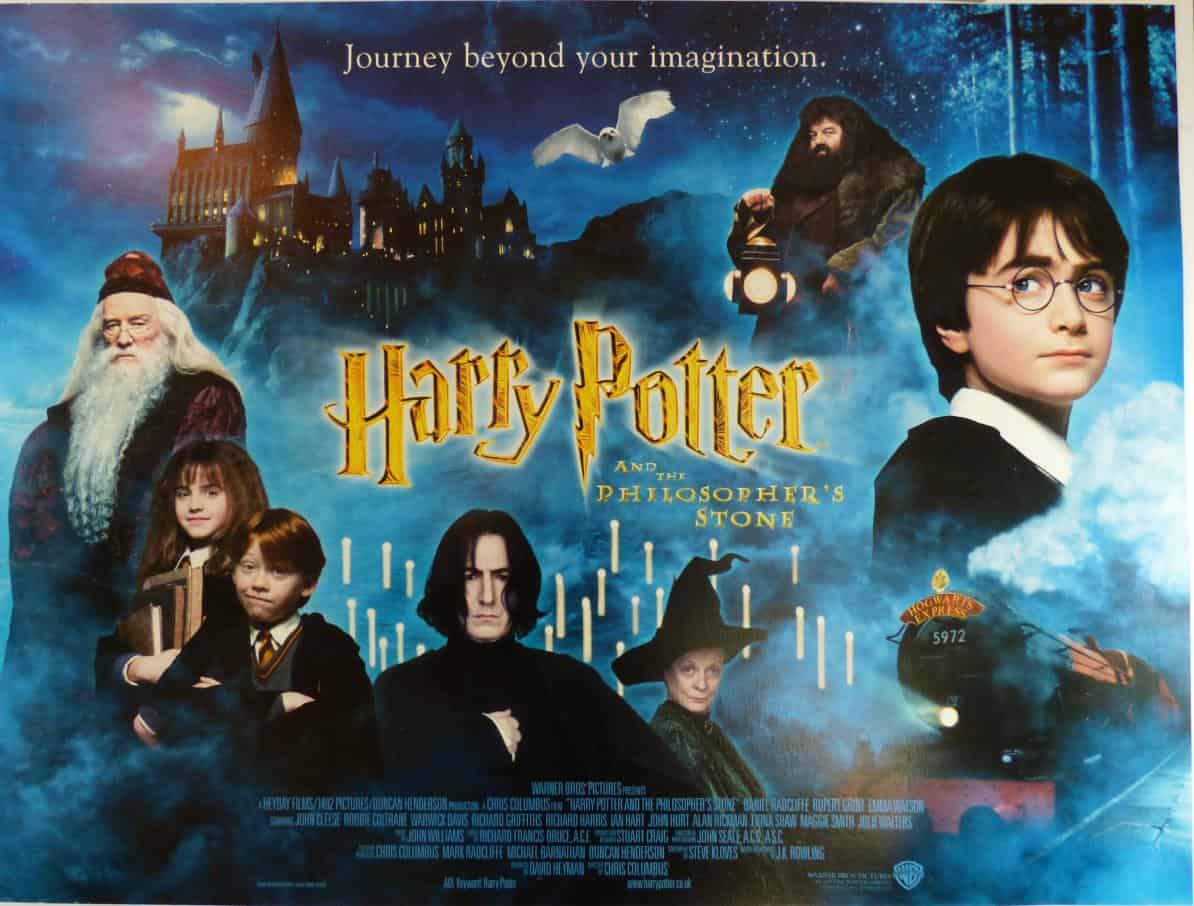
Harry Potter and the Philosopher’s Stone Summary: A Journey of Choice and Courage . “It is our choices, Harry, that show what we truly are, far more than our abilities.” — Albus Dumbledore
🔬 The Premise: The Boy Who Lived
Harry Potter grows up as an ordinary, neglected boy living with his aunt and uncle, the Dursleys. His life is confined to a cupboard under the stairs until his eleventh birthday, when he discovers he is a wizard. He learns that his parents did not die in a car crash, as he was told, but were murdered by the dark wizard Lord Voldemort. Harry is famous in the wizarding world because he is the only person to have ever survived Voldemort’s killing curse, leaving him with a lightning-bolt scar on his forehead.
📜 Plot Summary: The First Year at Hogwarts
1. A New World
Harry enters Hogwarts School of Witchcraft and Wizardry, where he befriends the loyal Ron Weasley and the brilliant Hermione Granger. Under the guidance of the wise Headmaster Albus Dumbledore, Harry begins to master magic and finds a sense of belonging for the first time in his life.
2. The Mystery of the Stone
Harry and his friends discover that a legendary object is being hidden at the school: the Philosopher’s Stone, which grants immortality and unlimited wealth. Suspecting that the stern Potions Master, Professor Snape, is trying to steal it for Voldemort, the trio decides to protect it themselves.
3. The Final Confrontation
After bypassing a series of dangerous magical obstacles (a giant chess set, devil’s snare, etc.), Harry reaches the final chamber. To his surprise, he finds not Snape, but the stuttering Professor Quirrell, who has been hosting the weakened spirit of Voldemort on the back of his head.
Harry retrieves the Stone from the Mirror of Erised because his heart’s desire was to find the Stone, not to use it. Voldemort is defeated once again, and the Stone is destroyed.
💡 Strategic & Philosophical Insights
1. The Power of Choice (Stoic Agency)
The Sorting Hat wants to put Harry in Slytherin, noting his ambition. However, Harry whispers, “Not Slytherin.” This is a fundamental lesson in agency: your origin or your traits do not define you; your conscious decisions do.
2. The Protective Shield of Love
Harry defeats Quirrell/Voldemort simply by touching them. Dumbledore explains that because Harry’s mother sacrificed herself to save him, she left a permanent mark of love on his skin—a protection so ancient and powerful that Voldemort cannot touch him.
-
Connection: This mirrors Viktor Frankl’s belief that love is the ultimate and highest goal to which man can aspire.
3. Memento Mori: Acceptance of Mortality
When the Stone is destroyed, its owner, Nicolas Flamel, must face death. Dumbledore provides a Stoic reflection: “To the well-organized mind, death is but the next great adventure.” This aligns with Marcus Aurelius’s teachings on accepting the natural cycle of life.
📊 Character Archetypes & Modern Disciplines (Table)
| Character | Virtue Represented | Modern Discipline Connection |
| Harry Potter | Courage & Choice | Amor Fati (Loving/Owning Fate) |
| Hermione Granger | Knowledge & Discipline | Deep Work (Focused Mastery) |
| Ron Weasley | Loyalty & Support | Human Connection (Taming/Bonds) |
| Albus Dumbledore | Wisdom & Strategic Vision | The Master Strategist (Covey) |
Here is the comprehensive English analysis connecting the mystical Mirror of Erised from Harry Potter with the rational, modern philosophy of Naval Ravikant. This synthesis explores how we can escape the “Desire Trap” to find true mental freedom.
The Mirror of Erised and Naval Ravikant: Escaping the Desire Trap. “It does not do to dwell on dreams and forget to live.” — Albus Dumbledore
1. Desire is a Contract for Unhappiness
Naval Ravikant’s most famous axiom on happiness is: “Desire is a contract that you make with yourself to be unhappy until you get what you want.”
-
The Harry Potter Connection: When Harry looks into the Mirror of Erised, he sees his lost family. It is his deepest desire. However, the mirror provides no reality—only a reflection of what is missing. By standing before it, Harry enters a “contract” where he cannot be happy in the present because he is focused on an unattainable past.
-
The Insight: Every time we obsess over a “want,” we are effectively telling ourselves, “I am not enough as I am right now.” Like the mirror, our desires often fascinate us but leave us “vaguely suffering.”
2. The Secret of the Stone: Attachment vs. Intent
At the end of the book, Harry retrieves the Philosopher’s Stone from the mirror. Dumbledore explains the trick: “Only a person who wanted to find the Stone—find it, but not use it—would be able to get it.”
-
Naval’s Philosophy: Naval speaks often about “Non-Attachment.” He suggests that to win at the game of life, you must be able to play the game without being desperate for the prize. When you are desperate, your judgment is clouded.
-
Strategic Takeaway: True success (The Stone) comes to those who have the skills and the intent, but not the desperate “need” to use it for ego or immortality. When you lower your attachment to the outcome, you actually increase your chances of achieving it.
3. Mimetic Desire and the Mirror of Status
When Ron Weasley looks into the mirror, he doesn’t see family; he sees himself as Head Boy and Quidditch Captain, holding the House Cup. He sees himself outshining his brothers.
-
Naval’s Warning: Naval advises us to avoid Status Games. These are “zero-sum games” where for you to win, someone else must lose. Ron’s desire is “mimetic”—he wants what his brothers have, but better.
-
The Solution: Naval suggests playing Wealth Games (positive-sum) and focusing on Specific Knowledge. Instead of trying to be “the best” compared to others (like Ron in the mirror), aim to be the “only” person who does what you do.
📊 Comparative Analysis: The Mirror vs. Naval’s Logic
| Scenario | The Trap of the Mirror | Naval Ravikant’s Wisdom |
| Future Focus | Living in a “dream world” that doesn’t exist. | “Happiness is there when you remove the sense of something missing.” |
| Material Goals | Seeking the Stone for gold or eternal life. | “Wealth is assets that earn while you sleep; money is how we transfer time.” |
| Competition | Ron’s desire to outshine his peers. | “Ignore competition. If you are building your own brand, you have no competition.” |
| State of Mind | Obsession and wasting away. | Presence. Enlightenment is the space between thoughts. |
💡 Strategic Takeaway: Step Away from the Mirror
Dumbledore eventually moves the mirror to a secret location to protect Harry. You must do the same with your “internal mirrors.”
-
Audit Your Desires: Ask yourself: “Is this my own desire, or am I just looking at someone else’s ‘House Cup’ (Status)?”
-
Find the Stone Through Purpose: Work on things that you would do even if you didn’t get “the gold” at the end. This lack of desperation is your greatest competitive advantage.
-
Replace Dreams with Systems: As James Clear would agree, don’t just stare at the reflection of the “Future You.” Start the small, atomic habits that bring that person into the present.