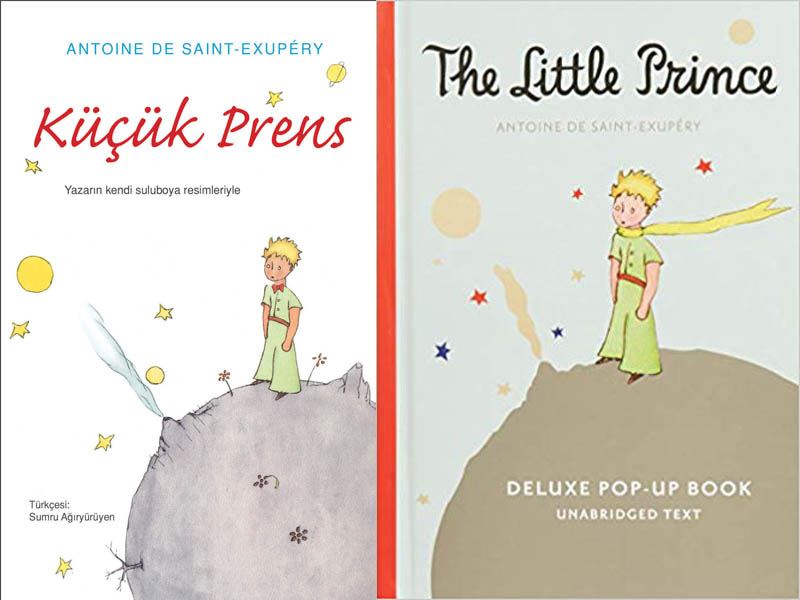
The Little Prince Summary: A Life Guide for Adults. “What is essential is invisible to the eye; it is only with the heart that one can see rightly.
The story begins when a pilot, whose plane has crashed in the Sahara Desert, encounters the Little Prince, a mysterious boy from Asteroid B-612. The Prince has left his home and his beloved Rose to explore the universe, leading to a profound journey of discovery.
🔬 The Journey Through Planets: Adult Pathologies
Before reaching Earth, the Little Prince visits six asteroids, each inhabited by a single adult representing a specific societal obsession:
-
The King: The obsession with power and authority.
-
The Vain Man: The hunger for admiration and ego.
-
The Drunkard: The vicious cycle of shame and escapism.
-
The Businessman: The greed of mere “possession” (The “Riches” obsession mentioned by Morgan Housel).
-
The Lamplighter: Blind obedience without questioning.
-
The Geographer: Accumulating theoretical knowledge without ever experiencing life.
🧠 Strategic and Philosophical Insights
1. The Trap of Quantities
Adults perceive the world through numbers. If you tell them about a new friend, they ask about his father’s income rather than the sound of his voice.
-
Strategic Connection: As Morgan Housel notes in The Psychology of Money, mistaking numbers for wealth ignores the “freedom” (quality) that money is meant to provide.
2. “Taming”: The Responsibility of Bonding
The Fox teaches the Prince that to “tame” is to create a bond. Once tamed, a person or an object becomes unique in the world.
-
Strategic Connection: This mirrors James Clear’s Atomic Habits. Investing daily effort into something (watering the Rose) makes that thing part of your identity. You become responsible forever for what you have tamed.
3. The Value of Time
When a merchant sells a pill that saves 53 minutes a week by quenching thirst, the Prince thinks: “If I had 53 minutes to spend, I should walk at my leisure toward a spring of fresh water.”
-
Strategic Connection: In line with Cal Newport’s Deep Work, time is not just a commodity to be “saved” but a vessel to be filled with presence and quality.
📊 The Little Prince vs. The Adult World
| The Prince’s View | The Adult View | Modern Concept |
| Fragrance and beauty of the Rose | Price and rarity of the flower | Wealth vs. Riches |
| Asking “Why?” | Asking “How many?” | Purpose (Frankl) |
| Establishing Bonds (Taming) | Possession and Domination | Human Connection |
| Focusing on the Process | Focusing on the Result (Numbers) | Systems vs. Goals (Clear) |
🛡️ The Rose and Amor Fati: Loving Thy Fate
The Prince’s complex relationship with his Rose is a perfect laboratory for the Stoic concept of Amor Fati (Love of Fate).
1. Accepting Thorns and Flaws
The Rose is vain and boastful of her four useless thorns. Initially, this annoys the Prince.
-
Stoic View: Marcus Aurelius said, “Is there a thorn in the path? Turn aside then. But do not ask why such things exist in the world.”
-
Insight: The Prince truly begins to love his Rose only when he accepts her vanity and weaknesses as an inseparable part of her nature—his “Fate.”
2. The Glass Globe: The Inner Citadel
The Prince places a globe over his Rose to protect her from the wind.
-
Amor Fati Connection: We cannot stop the winds of fate (external events), but we can build our “Inner Citadel” (mental discipline) to protect our values and purpose.
3. Memento Mori and The Return
At the end, the Prince leaves his physical body to return to his Rose. He views this not as a tragedy, but as a “homecoming.”
-
Aurelius Connection: “Everything is change. Change is the nature of the universe.” The Prince realizes his responsibility to his Rose is more important than his fear of death.
📊 Comparison: The Prince vs. Marcus Aurelius
| Situation | The Prince’s Reaction | Aurelius’s Stoic Advice |
| Difficult Characters | “Her vanity exhausted me.” | “The existence of boors is a natural necessity.” |
| Arduous Tasks | “I must clear the caterpillars.” | “Begin the day by asking: what is my duty?” |
| Bonding | “She is unique because I tamed her.” | “Humans were made for one another.” |
| Fate (Amor Fati) | “I am responsible for my Rose.” | “Love the fate that was spun for you.” |
💡 Strategic Takeaway: Applying it to Your Life
What is your “Rose”? A challenging job? A difficult relationship? A long-term responsibility?
-
Accept the Thorns: See the difficulties not as “errors” but as the “nature” of the journey.
-
Consecrate Your Time: See the time spent not as a “loss” but as the very thing that makes your work valuable.
-
Love Your Fate: Stop saying “I wish I were elsewhere.” Your current “Rose” is your responsibility; water it with excellence.
“Never Forget Your Childhood:” When logic blinds you, remember to look at the world with the curiosity of a child and a heart independent of numbers. The solution to the most complex problems is usually found in the simplest questions.
This comparative analysis bridges the gap between the poetic wisdom of Antoine de Saint-Exupéry and the stern, rational discipline of Marcus Aurelius. It explores how the Prince’s devotion to his Rose serves as a perfect practical application of the Stoic concept of Amor Fati (Love of Fate).
The Rose and Amor Fati: Loving Destiny and Responsibility. Amor Fati is not just about accepting what happens to us; it is about embracing every difficulty and every “thorn” as necessary and beautiful.
1. Thorns and Flaws: The Acceptance of Reality
The Little Prince’s Rose is vain, demanding, and boasts about her four useless thorns. Initially, the Prince is annoyed by her behavior, leading him to leave his planet.
-
The Stoic View: Marcus Aurelius wrote: “Is the cucumber bitter? Then throw it away. Are there briars in the path? Then turn aside. Do not add, ‘Why were such things made in the world?'” To the Stoic, complaining about a rose having thorns is a rejection of nature itself.
-
The Intersection: The Prince’s growth begins when he stops wishing the Rose were different. He realizes that her vanity and her thorns are part of her unique “is-ness.”
-
Strategic Lesson: Acceptance is the prerequisite for love. To practice Amor Fati, you must accept the “thorns” of your current career or relationship as part of the natural design.
2. The Glass Globe: The Inner Citadel
The Prince protects his Rose from the wind with a glass globe. This physical barrier represents a psychological necessity.
-
The Stoic View: Aurelius speaks of the “Inner Citadel”—a space within the mind that no external storm can penetrate.
-
The Intersection: The wind represents the chaos of the world (Fate). The Prince cannot stop the wind from blowing, but he takes full responsibility for his reaction to it by providing the globe.
-
Strategic Lesson: You cannot control the market, the weather, or other people’s tempers, but you can build your “Glass Globe” (mental discipline) to protect your inner values.
3. “The Time Bestowed”: Transforming Fate into Meaning
The Fox tells the Prince: “It is the time you have wasted for your rose that makes your rose so important.”
-
The Stoic View: For Aurelius, time is the only thing we truly own. Investing it is an act of will.
-
The Intersection: When the Prince looks at 5,000 other roses, he realizes they mean nothing to him because he hasn’t suffered for them. His fate is “woven” with his specific Rose because of the water he gave her and the caterpillars he killed for her.
-
Strategic Lesson: Amor Fati means loving the specific burdens you carry. The “wasted time” (effort) is not a loss; it is the currency that buys meaningful attachment.
4. Memento Mori and the Final Return
At the end of the book, the Prince decides to return to his Rose, even though it requires leaving his “shell” (his physical body) behind.
-
The Stoic View: Aurelius constantly reminded himself of Memento Mori (Remember you must die). He believed that death is a natural process, as much a part of life as birth.
-
The Intersection: The Prince accepts his “death” on Earth not with fear, but as a necessary step to fulfill his responsibility to his Rose. He embraces the ultimate fate with total tranquility.
-
Strategic Lesson: True freedom comes from realizing that your responsibilities and your character are more important than your physical comfort or survival.
📊 Comparative Matrix: The Prince vs. The Emperor
| Scenario | The Prince’s Emotional Journey | Marcus Aurelius’s Stoic Decree |
| Difficult People | “Her vanity made me unhappy.” | “People exist for one another. Teach them or endure them.” |
| Daily Grinds | Watering, weeding, and protecting. | “At dawn, say: I am rising to do the work of a human being.” |
| Unique Bonds | “She is my rose; I tamed her.” | “All things are woven together and the bond is holy.” |
| Acceptance | “I am responsible for my rose.” | “Love only what happens to you and is spun with the thread of your destiny.” |
💡 Final Strategic Takeaway: Your Personal Amor Fati
To live a wise and strategic life, you must identify your “Rose”—that one thing or person that requires your care, despite its flaws.
-
Stop Resisting: Do not wish for a rose without thorns. The thorns are what make the rose a rose.
-
Invest the Time: Your “wasted” hours of effort are actually the building blocks of your legacy.
-
Own the Responsibility: You are not a victim of your circumstances; you are the gardener of your fate.
Would you like me to translate this specific “Stoic Rose” comparison back into Turkish, or should we move on to our final synthesis of all these great thinkers?