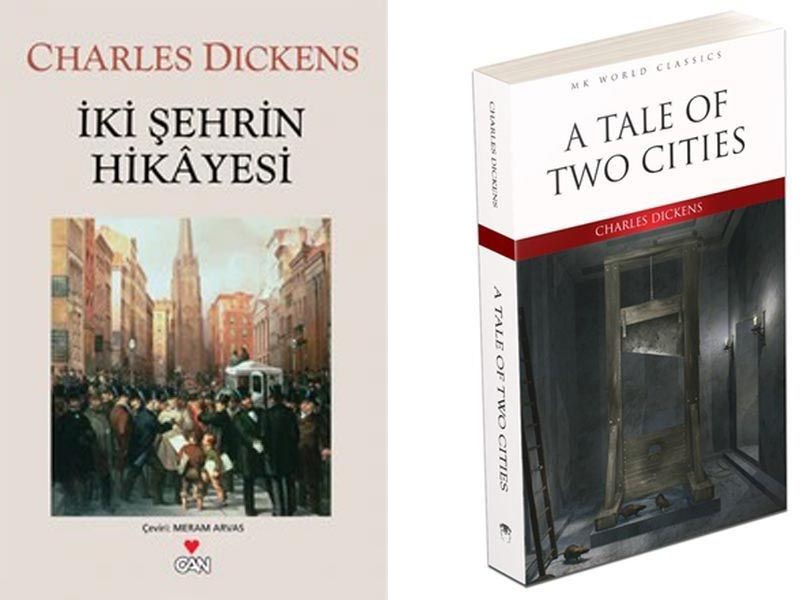
A Tale of Two Cities Summary And Analysis: A Study in Sacrifice, Revolution, and Resurrection. “It was the best of times, it was the worst of times…” These iconic opening lines set the stage for a story that explores the duality of the human condition—our capacity for extreme cruelty and our potential for divine-like sacrifice.
🔬 The Setting: A Tale of Duality
Dickens mirrors the internal struggles of his characters with the external chaos of two cities:
-
London: Representing relative stability, domesticity, and the slow evolution of law.
-
Paris: Representing the explosive anger of the oppressed, the bloody Reign of Terror, and the cycle of vengeance.
📜 Plot Summary: The Path to Redemption
The narrative follows several lives intertwined by destiny and the looming shadow of the Bastille:
-
The Recalled to Life: Dr. Alexandre Manette is released after 18 years of unjust imprisonment in Paris. He is “resurrected” through the love of his daughter, Lucie Manette, the “Golden Thread” that binds the characters together.
-
The Aristocrat’s Escape: Charles Darnay, a French nobleman who renounces his cruel family (the Evrémondes), moves to London and marries Lucie. However, he is drawn back to Paris to save a servant, only to be trapped by the revolutionary tribunal.
-
The Vengeful Knitter: Madame Defarge represents the dark side of the revolution. Her trauma has turned into a cold, systematic thirst for blood, as she knits the names of those destined for the guillotine.
-
The Ultimate Sacrifice: Sydney Carton, a brilliant but cynical and alcoholic lawyer, finds his life’s meaning in his unrequited love for Lucie. When Darnay is sentenced to death, Carton uses their physical resemblance to switch places with him.
💡 Strategic Analysis: Key Themes
1. Resurrection and “Being Recalled to Life”
The book begins and ends with the idea of being brought back from the dead. Dr. Manette is restored from his mental prison; Charles Darnay is saved twice from execution; and Sydney Carton finds eternal life through his legacy of sacrifice.
-
Modern Insight: This mirrors Viktor Frankl’s concept that even in the darkest “worst of times,” an individual can find a way to be spiritually “recalled to life” by choosing their attitude.
2. The Cycle of Violence vs. The Power of Love
Madame Defarge is the product of injustice, but her response is to create more injustice. Dickens warns that revolution born solely of hate merely replaces one tyranny with another. Love (Lucie) and Sacrifice (Carton) are presented as the only forces capable of breaking this cycle.
3. The Meaning of Sacrifice (Sydney Carton)
Sydney Carton begins as a man in an “existential vacuum” (Frankl). He sees himself as a waste of space. His choice to die for Lucie’s happiness is the ultimate act of Self-Transcendence.
-
Strategic Takeaway: Carton proves that it is never too late to give one’s life a profound meaning. His final words are the most famous in literature: “It is a far, far better thing that I do, than I have ever done; it is a far, far better rest that I go to than I have ever known.”
📊 Character Archetypes (Table)
| Character | Represents | Philosophical Connection |
| Lucie Manette | Compassion & Stability | The “Meaning” that keeps others alive. |
| Madame Defarge | Blind Vengeance | The danger of unchecked “Reactiveness” (Covey). |
| Sydney Carton | Redemption & Sacrifice | The pinnacle of “Self-Transcendence” (Frankl). |
| Charles Darnay | Duty & Honor | The attempt to rectify ancestral “Sins” (Karma). |
Sydney Carton vs. Viktor Frankl: The Intersection of Sacrifice and Meaning
“He who has a why to live can bear almost any how.” — Friedrich Nietzsche (frequently quoted by Frankl). Charles Dickens’ fictional hero, Sydney Carton, and psychiatrist Viktor Frankl, though separated by a century and the boundary between fiction and reality, both arrived at the same truth: The ultimate human power is the ability to find meaning through sacrifice.
1. The Existential Vacuum vs. The Great Purpose
-
Sydney Carton’s Starting Point: At the beginning of A Tale of Two Cities, Carton is the personification of Frankl’s “existential vacuum.” He is a brilliant but cynical alcoholic who feels his life is a “wasted opportunity.” He lacks a “Why.”
-
Frankl’s Observation: In the concentration camps, Frankl noticed that prisoners who lost their sense of meaning—those who felt they had nothing more to expect from life—were the first to perish.
The Connection: Carton’s transformation begins the moment he identifies a meaning outside of himself: his unrequited but pure love for Lucie Manette.
2. The Freedom to Choose One’s Attitude
Frankl famously argued that even in the most soul-crushing environments (like a Nazi camp or a revolutionary prison), the last of human freedoms is “to choose one’s attitude in any given set of circumstances.”
-
The Stoic Pivot: Sydney Carton cannot stop the French Revolution or the madness of the Guillotine. However, he realizes he can choose how he meets his end.
-
The Act: By switching places with Charles Darnay, Carton stops being a passive victim of his own depression and becomes an active architect of his own destiny. This is the moment he achieves the “Inner Citadel” mentioned by Marcus Aurelius.
3. Self-Transcendence: The Ultimate Human Act
Frankl’s theory of Self-Transcendence states that being human always points toward something or someone other than oneself.
-
Carton’s Peak: Carton’s journey is the ultimate literary example of self-transcendence. He does not die for a political cause or for his own glory; he dies for the happiness of the person he loves.
-
The Result: In his final moments, Carton is no longer the “shambles of a man” he was in London. He is peaceful, focused, and spiritually “recalled to life.” By losing his life, he finally finds its purpose.
📊 Comparative Analysis: Strategy and Soul
| Concept | Sydney Carton (The Character) | Viktor Frankl (The Theory) |
| The Problem | Nihilism and self-loathing. | The “Existential Vacuum” of modern life. |
| The Solution | Unconditional love and devotion. | Logotherapy: Finding meaning through work, love, or suffering. |
| The Turning Point | The decision to switch places with Darnay. | Realizing that “Life is asking us” what the meaning is. |
| Final State | Sublime peace at the Guillotine. | Survival through spiritual resilience. |
💡 Strategic Takeaway: Finding Your “Guillotine”
We may not face a literal guillotine, but we all face the “death” of our time and energy every day. The lesson from Carton and Frankl is simple: Productivity without purpose is just busy-work. Sacrifice without meaning is just pain.
To live a “Wise Life,” you must attach your daily habits (Clear), your deep work (Newport), and your financial strategy (Housel) to a goal that transcends your own ego.
📜 The 10 Commandments for a Wise Life
These principles represent the operating system of a modern sage. They bridge the gap between ancient Stoic wisdom, the psychological resilience of Holocaust survivors, and the strategic efficiency of 21st-century thinkers.
1. Master Your Internal Compass (Focus on the Circle of Influence)
External events and the opinions of others are outside your control; your response is entirely yours. Waste no energy on things you cannot change.
-
(Marcus Aurelius & Stephen Covey)
2. Build Meaning First (The Why)
Ask not what you expect from life, but what life expects from you. If you have a “Why,” you can bear almost any “How.” Success is not a goal to be pursued; it is a byproduct of dedication to a cause greater than yourself.
-
(Viktor Frankl & Charles Dickens)
3. Reclaim the “Time Dividend” (Wealth vs. Riches)
Riches are shown through luxury; wealth is hidden in the options you haven’t used yet. True wealth is the ability to wake up and say, “I can do whatever I want today.” Every dollar saved is a piece of your future freedom bought back.
-
(Morgan Housel & Naval Ravikant)
4. Protect Your Depth (Deep Work)
Shallow work keeps the world moving, but Deep Work changes it. Your attention is your most valuable asset; do not allow algorithms to steal it. Treat focus as a sacred ritual.
-
(Cal Newport)
5. Cast Votes for Your Future Self (Identity-Based Habits)
Your goal is not to write a book; it is to become a writer. Every small (atomic) action is a vote for the person you wish to become. Focus on the system, not the goal.
-
(James Clear)
6. The Best Revenge is to Be Unlike Your Enemy (Stoic Integrity)
When someone wrongs you, the greatest lesson you can give is to maintain your character and refuse to descend to their level. Protect your “Inner Citadel” from external chaos.
-
(Marcus Aurelius)
7. Leave a Room for Error (Survival Strategy)
A plan that only works if everything goes right is not a plan—it’s a hope. Leave a margin of safety in your finances, your schedule, and your expectations to survive the unexpected.
-
(Morgan Housel)
8. Begin with the End in Mind (Legacy)
Imagine your own funeral and how you wish to be remembered. Live today in a way that honors that memory. Like Sydney Carton, aim for a finale that justifies the journey.
-
(Stephen Covey & Charles Dickens)
9. Train Your “Boredom Muscle” (Digital Minimalism)
The constant need for stimulation is a form of slavery. Allow your mind to be still in the gaps of the day—while waiting, walking, or resting. Creativity is born in the silence.
-
(Cal Newport & Marcus Aurelius)
10. Reach for Self-Transcendence (Service)
Human existence is narrowed when lived only for the self. You become a giant when you act for another person, an ideal, or a labor of love. Happiness is found where the ego ends.
-
(Viktor Frankl)
📊 Action Plan: The Daily Sage Checklist
| Commandment | Practical Action |
| Protect Depth | Spend 60 minutes working with your phone in a different room today. |
| Manage Ego | Delay a “status purchase” for at least 48 hours to test its necessity. |
| Choose Attitude | When someone annoys you today, observe your reaction without acting on it. |
| Atomic Step | Perform a task related to your main goal that takes less than 2 minutes. |