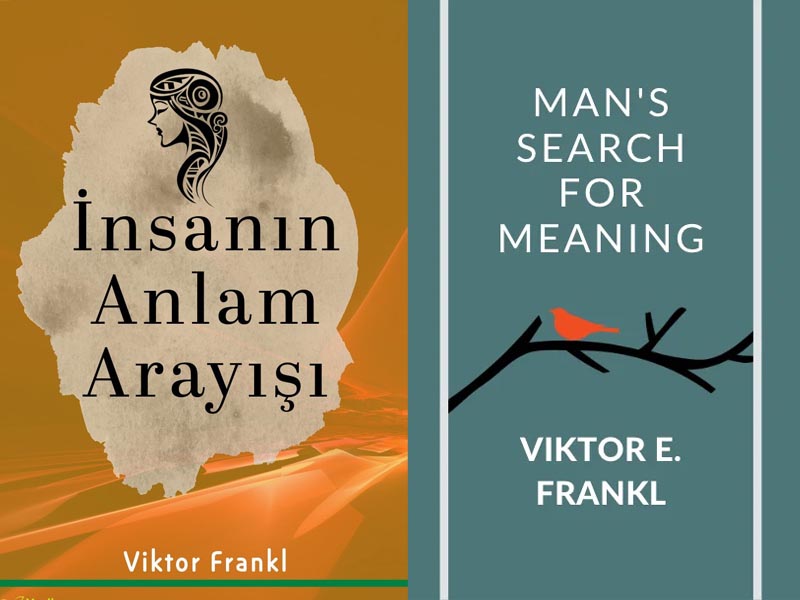
Man’s Search for Meaning Summary : A Deep Dive into the Architecture of Resilience. What happens when a human being is stripped of everything—identity, family, and possessions? Viktor Frankl, a psychiatrist who survived the Nazi death camps, discovered that the ultimate power lies not in physical strength, but in the “Will to Meaning.” This is a deep analysis of how to find purpose in the darkest of times. Explore Viktor Frankl’s Logotherapy and the search for meaning. Learn how to turn suffering into triumph and find your purpose in life.
Beyond Pleasure and Power: The Will to Meaning
Frankl challenged the psychological giants of his time. While Freud emphasized the “Will to Pleasure” and Adler the “Will to Power,” Frankl introduced Logotherapy, centered on the “Will to Meaning.”
-
The Existential Vacuum: Modern life often leads to a sense of emptiness. Frankl argues that when our lives lack meaning, we try to fill the void with hedonism (pleasure), aggression (power), or addiction.
-
The Takeaway: Meaning is not a luxury; it is a survival mechanism. To find fulfillment, one must look beyond oneself and commit to a cause or another person.
The Last Human Freedom: Stimulus and Response
The most famous insight from Frankl’s experience is the concept of the “Space” between what happens to us and how we act.
“Between stimulus and response there is a space. In that space is our power to choose our response. In our response lies our growth and our freedom.”
-
Strategic Insight: We cannot always control our environment (the stimulus), but we have the ultimate freedom to choose our attitude. This shifts a person from being a victim of circumstances to a master of their inner life.
-
Application: When faced with a crisis, stop. Realize that your emotional reaction is a choice. Ask: “What is the most honorable way to respond to this challenge?”
Tragic Optimism: Turning Suffering into Triumph
Frankl does not advocate for “toxic positivity.” Instead, he speaks of Tragic Optimism—the ability to remain optimistic despite the “Tragic Triad” of human existence: Pain, Guilt, and Death.
-
Pain into Achievement: Suffering is an opportunity for personal growth and character building.
-
Guilt into Self-Improvement: Guilt serves as a catalyst to change ourselves for the better.
-
Death into an Incentive for Action: The fact that life is finite makes every moment and every decision unique and irreplaceable.
The Three Paths to Meaning
According to Logotherapy, meaning can be discovered in three distinct ways:
| Path | Definition | Modern Example |
| Creative Values | What we give to the world through our work or art. | Completing a difficult project, building a business, or raising a child. |
| Experiential Values | What we take from the world through beauty and love. | Experiencing nature, enjoying art, or deeply loving another person. |
| Attitudinal Values | The stand we take toward unavoidable suffering. | Maintaining dignity and courage in the face of a terminal illness or loss. |
Sunday Neurosis and the Void
Frankl observed a phenomenon he called “Sunday Neurosis”—the depression that many people feel when the busy work week ends and they are left with the void within themselves.
-
The Deep Insight: Without a central purpose, “free time” becomes a burden. This is why people often chase distractions to avoid facing their own lack of meaning.
-
The Solution: True freedom is not freedom from responsibility, but freedom to fulfill one’s unique tasks in life.
The Ultimate Secret of Love
For Frankl, love is the only way to truly understand another human being.
-
Deep Takeaway: By loving someone, we see their hidden potential—the person they are meant to become. Through this vision, we empower the beloved to actualize that potential. Love is not a feeling; it is a profound act of recognition.
🔍 Deepened Existential Insights
Frankl’s teachings go beyond simple survival; they provide a structural answer to the modern “crisis of meaning.” Here are the most profound layers of his philosophy:
1. Responsibility: The Flip Side of Freedom
Frankl argues that freedom is only half of the story. Without responsibility, freedom degenerates into mere arbitrariness.
-
Deep Takeaway: “Freedom is in danger of degenerating into mere arbitrariness unless it is lived in terms of responsibleness.” He famously proposed that the Statue of Liberty on the East Coast should be supplemented by a Statue of Responsibility on the West Coast.
-
The Application: Shifting from “What do I expect from life?” to “What does life expect from me?” transforms an individual from a passive consumer into an active participant in their own existence.
2. Paradoxical Intention: Conquering Fear with Fear
This is one of the most powerful techniques Frankl developed to deal with anxiety and phobias.
-
Deep Takeaway: The more we try to avoid an anxiety-inducing situation, the more power it gains over us. Frankl suggested that patients should try to consciously and humorously bring about the very thing they fear (e.g., trying to “sweat as much as possible” during a public speech).
-
The Application: By leaning into the fear with humor and intention, you break its physiological grip on your nervous system.
3. Self-Transcendence: The Secret Door to Healing
Human beings are trapped in a “narcissistic cage” when they focus only on their own happiness or pain.
-
Deep Takeaway: Happiness cannot be pursued; it must ensue. It is a side effect of dedicating oneself to a cause greater than oneself or loving another person. When you focus on something outside of yourself, your own suffering paradoxically begins to diminish.
🛠️ Purpose Workshop: A Guide to Discovering Your Meaning
Based on the principles of Logotherapy, this 4-step workshop is designed to help readers fill their “Existential Vacuum” and find their unique path.
Step 1: From Suffering to Significance
-
The Question: What is the greatest challenge or pain you are currently facing or have faced in the past?
-
The Exercise: Write down one virtue (patience, resilience, compassion) that this hardship has “forced” you to develop. How can this pain help you assist others in the future?
Step 2: The Inventory of Values
-
Creative Values: What activity makes you lose track of time? What can you contribute to the world?
-
Experiential Values: What natural beauty, piece of art, or person makes you feel that “life is worth living after all”?
Step 3: Answering Life’s Question
-
The Exercise: Imagine that life is currently asking you a specific question. It likely sounds like this: “Given your unique talents and your past experiences, what problem in your environment can you help heal?”
-
The Mission: This week, plan one small but meaningful action that is done solely for the benefit of someone else.
Step 4: The Final Choice of Attitude
-
The Scenario: Think of an unchangeable constraint in your life (a past event, a physical limitation, or a financial situation).
-
The Decision: Will you carry this constraint as a “victim” or as a “human being with dignity”? Define your attitude today.
🛡️ Resilience Guide: Frankl’s Strategies for Dealing with Pain and Hardship
Life inevitably presents us with unavoidable suffering. According to Frankl, the key to overcoming these challenges is not just “grit,” but what he calls “Tragic Optimism.” Here is the strategic roadmap for navigating hardship:
1. The “Sacred Space” Between Stimulus and Response
Frankl famously noted: “Between stimulus and response there is a space. In that space is our power to choose our response.”
-
The Depth: External events (job loss, grief, setbacks) are stimuli. Usually, we react automatically. Recognizing this “space” allows us to stop being a victim of our circumstances and become the architect of our own inner life.
-
The Application: When faced with a crisis, pause and ask yourself: “What is the most honorable and constructive response I can give to this situation right now?”
2. Resilience Through Meaning
In the concentration camps, those who survived were not necessarily the physically strongest, but those who had a “Why”—a reason to live (a loved one to return to, a book to finish, or a mission to complete).
-
The Strategy: If you are suffering, that suffering must have a purpose. If you can link your pain to a goal (such as helping others, creating something, or the love for another), the pain becomes endurable. As Nietzsche said, “He who has a why to live can bear almost any how.”
-
The Application: Ask yourself: “How is this difficulty preparing me for the future version of myself? Who can I inspire once I have overcome this?”
3. Self-Transcendence: The Secret to Inner Healing
Focusing solely on our own pain creates a “narcissistic loop” that magnifies distress. Healing begins when we turn our focus outward.
-
The Depth: By helping someone else or dedicating ourselves to a cause, we distract the ego from its own suffering. Paradoxically, by “forgetting” ourselves, we find ourselves.
-
The Application: In times of personal struggle, find one small way to serve others. Volunteering or taking on a responsibility for someone else’s sake builds psychological immunity.
📉 Three Core Approaches to Suffering
| Frankl’s Method | Definition | Real-Life Application |
| Paradoxical Intention | Facing your fears by intentionally leaning into them. | Instead of fearing anxiety, tell yourself: “I am going to try to be as anxious as possible right now,” which often breaks the cycle of fear. |
| Deredelection | Shifting focus away from the problem toward a meaningful activity. | Stop over-analyzing the pain; instead, engage in a task that serves a higher purpose or brings value to others. |
| Tragic Optimism | Saying “Yes” to life despite the pain. | Instead of asking “Why me?”, ask “What is this situation demanding of me? How can I remain a person of character?” |
4. Answering Life’s Questions
Most people ask, “What is the meaning of life?” looking for an answer from the universe. Frankl reverses this question:
“It did not really matter what we expected from life, but rather what life expected from us. We needed to stop asking what the meaning of life was, and instead to realize that we were the ones being questioned by life.”
The Takeaway: Every challenge you face is a question life is asking you. Your response—your action and your attitude—is your answer.
Viktor Frankl’ın derin felsefesini pratik bir eylem planına dönüştüren “Dayanıklılık Kontrol Listesi” bölümünü, makalenin global versiyonuna ekleyebileceğin profesyonel ve etkileyici bir İngilizce ile hazırladım.
🛡️ Resilience Checklist: 7 Steps for Navigating Hardship
When the storms of life hit, use this checklist as your psychological compass to find your inner center and shift your focus from pain to purpose.
1. Pause and Recognize the Space
-
[ ] Do I acknowledge that there is a space between what is happening to me (stimulus) and my reaction (response)?
-
[ ] Am I ready to wait 4 seconds to choose a “conscious response” instead of reacting blindly out of emotion?
2. Define Your Attitude
-
[ ] Do I realize that even if I cannot change the circumstances, I still possess the freedom to choose my attitude toward them?
-
[ ] What is the most dignified and honorable stand I can take right now?
3. Remember Your “Why”
-
[ ] Is there a responsibility, a task to be finished, or a loved one waiting for me in the future?
-
[ ] Do I have a “Why” powerful enough to help me endure this “How”?
4. Practice Self-Transcendence
-
[ ] Am I focusing only on my own pain, or is there a small act of kindness I can perform for someone else right now?
-
[ ] What can I do today to bring a smile to someone else’s face? (Redirecting focus outward is a key to healing.)
5. Utilize the Power of Humor
-
[ ] Can I find a touch of irony or an absurd detail within my current situation?
-
[ ] Can I look at myself from an outsider’s perspective and smile, even for a brief moment, at the tragedy?
6. Answer Life’s Question
-
[ ] Instead of asking “Why is this happening to me?”, am I asking “What does life expect from me right now through this event?”
-
[ ] What is the most meaningful action I can take in response to this challenge?
7. Choose Tragic Optimism
-
[ ] Am I willing to turn this suffering into a human achievement or a learning process?
-
[ ] Do I believe that a wiser and stronger version of “Me” is waiting at the end of this darkness?
📝 Implementation Note:
Keep this checklist in your notes or on your phone. In moments of crisis, when logical thinking becomes difficult, ticking off these points one by one will pull you out of the “victim” mindset and move you into “action and meaning” mode.