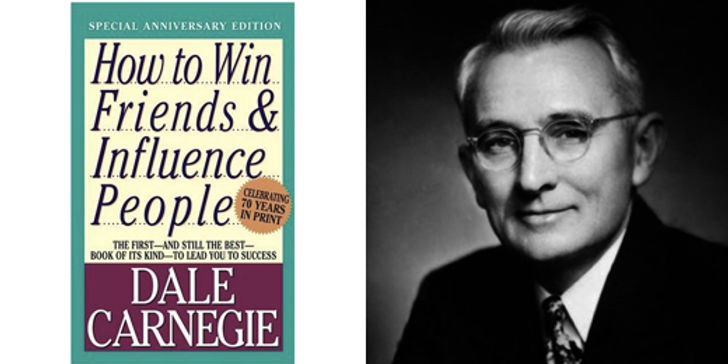
The Core Philosophy: The Craving for Importance
Carnegie posits that the deepest urge in human nature is the “desire to be important.” Unlike food or sleep, this hunger is rarely satisfied in modern society.
-
Appreciation vs. Flattery: True influence is built on sincere appreciation. Flattery is “from the teeth out,” while appreciation is “from the heart out.” To influence others, find something they genuinely do well and acknowledge it.
-
Modern Application: Instead of giving vague feedback to a colleague, be specific. Instead of “Good job,” say: “The way you handled that client’s objection in the meeting showed great emotional intelligence; it saved the deal.”
Advanced Takeaways: Psychological Mechanics
To truly internalize these techniques, we must understand the “why” behind them.
A. The Magic of Names: The Sound of Identity
A person’s name is the most sacred sound in the world to them. Forgetting it sends a subconscious message: “You are not important enough to remember.”
-
The Logic: Hearing one’s own name activates the brain’s reward centers. It bridges the gap between strangers instantly.
-
The Practice: Use the person’s name at the beginning and end of a conversation. It creates an invisible bond of respect.
B. The Art of Listening: “Interest” Creates “Interesting”
Most people do not listen; they simply wait for their turn to speak.
-
The Logic: When people talk about themselves, their brain experiences a pleasure response similar to food or money. By being a good listener, you become a “pleasure provider.”
-
The Practice: Use Encouraging Questions. Instead of talking about your weekend, ask: “What was the best part of your project?” or “How did you feel when that happened?”
C. The Poison of Criticism: Bypassing Defensive Walls
Criticizing someone is like shooting at their pride. A wounded ego does not cooperate; it only focuses on self-preservation.
-
The Logic: When criticized, the human brain enters a “threat state,” closing off to new ideas or logical reasoning.
-
The Practice: If you must correct a mistake, begin with honest praise. Package the correction as a “growth opportunity” rather than a failure.
D. The Seed-Planting Technique: Delegating Ownership of Ideas
People hate being told what to do, but they love following their own ideas.
-
The Logic: Autonomy is a core psychological need. We feel empowered when we think we discovered the solution ourselves.
-
The Practice: Instead of giving an order, ask a question: “What do you think about this problem? Would this solution work?” When they agree, the idea becomes theirs, and they will work twice as hard to make it succeed.
Dealing with Difficult People: Social Defense
Not everyone is cooperative. When dealing with toxic or difficult individuals, apply these Carnegie-based “Defense Strategies”:
-
Use “I” Statements: Instead of “You are always late,” say “I feel stressed when the schedule is delayed.” This removes the “attack” and prevents instant defensiveness.
-
Build a “Golden Bridge”: Allow the other person to save face. Even if they are wrong, give them an honorable way to change their mind without feeling defeated.
-
Label the Emotion: If someone is angry, say: “It seems like you are feeling very frustrated with this process.” Naming the emotion reduces its intensity in the brain.
Modern Social Strategy Check-List
| Daily Habit | Why It Works |
| Sincere Smile | Sends a subconscious signal of safety and warmth. |
| Admit Mistakes Quickly | Defuses arguments and shows high character. |
| Talk in Terms of Others’ Interests | Acts as a “visa” into their world. |
| Ask Questions Instead of Giving Orders | Inspires cooperation rather than resentment. |
🚀 Core Takeaways and Application Guide
To move beyond surface-level politeness and master true social influence, one must understand the psychological triggers behind Carnegie’s principles. Here is the deep-dive guide:
1. The Psychology of Affirmation: Paying the “Ego-Debt”
Every person you meet is carrying a subconscious “ego-deficit”—a need to feel seen and valued.
-
Strategic Insight: Affirmation is not just being “nice”; it is a social investment. When you sincerely appreciate someone, you lower their anxiety and build a bridge of trust.
-
Deep Application: Practice the “Observation Method.” Find a specific, non-obvious trait or achievement in the other person. Instead of a generic “You’re great,” say: “I noticed how you maintained your composure during that difficult negotiation. That level of self-control is rare.”
2. Radical Empathy: Seeing Through Their Lens
Most people view the world through a “Me-First” filter. To influence them, you must switch to a “Them-First” filter.
-
Strategic Insight: People do things for their reasons, not yours. If you can align your goals with their internal motivations, cooperation becomes inevitable.
-
Deep Application: Before a meeting or a difficult conversation, perform a “Perspective Audit.” Ask yourself: “If I were in their position, with their pressures and history, why would I be resisting this idea?” Address those hidden reasons directly with empathy.
3. The Socratic Method: Leading Without Pushing
Direct orders trigger the “fight or flight” response in the human brain. Questions, however, trigger the “problem-solving” response.
-
Strategic Insight: A person who “concludes” something on their own is much more committed to it than a person who is “told” what to do.
-
Deep Application: Replace “I need you to fix this” with “What do you think is the best way to handle this error?” By giving them the steering wheel, you ensure they drive exactly where you need them to go.
4. The Name-Sound Resonance
A person’s name is the verbal representation of their entire existence.
-
Strategic Insight: Using a name creates a “Cocktail Party Effect”—a phenomenon where the brain immediately focuses on a specific stimulus amidst noise. It creates instant intimacy.
-
Deep Application: Use the “Anchor Technique.” When meeting someone, repeat their name immediately: “It’s a pleasure to meet you, Sarah.” Then, use it once more during the conversation and once at the end. This solidifies your memory and their sense of importance.
💡 Modern Application: The “Digital Carnegie” Framework
In today’s fast-paced digital world, these classic principles translate into specific behaviors:
| Context | The “Carnegie” Move | The Desired Result |
| Email/Slack | Start with a brief, sincere compliment before the request. | Higher response rate and better tone. |
| Video Calls | Use the “Active Listening” posture (lean in, nod, eye contact). | Builds rapport despite the screen barrier. |
| Social Media | Comment on their achievements rather than just “Liking.” | Stronger personal networking. |
| Feedback | Use “And” instead of “But” (e.g., “You did great AND next time…”). | Constructive growth without resentment. |
🛑 Dealing with Difficult People: Social Intelligence Strategies
Carnegie’s principles work wonders in an ideal world, but what happens when you encounter toxic, aggressive, or stubborn individuals? Dealing with difficult people requires a blend of empathy and strategic boundaries. Here is how to handle high-conflict personalities:
1. Be Proactive, Not Reactive
Difficult people often try to provoke an emotional response to gain control of the situation.
-
The Strategy: Apply the “4-Second Rule.” Before responding to a provocation, take a deep breath. By choosing your response instead of reacting blindly, you keep the power. Your calm is their greatest challenge.
2. The Power of “I” Statements
When dealing with a difficult person, avoid starting sentences with “You,” as it sounds like an accusation and triggers instant defensiveness.
-
The Strategy: Use “I” statements to describe the impact of their behavior. Instead of saying, “You are always interrupting me,” say, “I find it difficult to finish my thoughts when the conversation moves so quickly.”
-
The Result: You are stating a fact about your experience, which is harder to argue against than a personal attack.
3. Build a “Golden Bridge” for Their Retreat
Difficult people are often driven by a fear of losing face or looking weak.
-
The Strategy: Give them an honorable way to change their mind. Instead of pointing out their mistake directly, frame it as a misunderstanding or lack of information.
-
Example: “I suspect you hadn’t seen the updated data when you made that decision. With this new info, I’m sure you’ll agree we should pivot.”
4. Labeling the Emotion (Tactical Empathy)
Often, a “difficult” person is simply someone who feels unheard or overwhelmed.
-
The Strategy: Use Emotional Labeling. Say, “It seems like you feel frustrated that your concerns aren’t being prioritized.” * The Logic: When you name an emotion, you move the activity in the other person’s brain from the amygdala (emotional center) to the prefrontal cortex (rational center), effectively de-escalating the tension.
Personality Types & Intervention Matrix
| Personality Type | Key Characteristic | Best Intervention |
| The Aggressor | Uses volume and intimidation. | Maintain calm eye contact. Speak softly but firmly. Do not mirror their anger. |
| The Chronic Complainer | Focuses only on the problem. | Shift immediately to solutions. Ask: “What is the first step you recommend to fix this?” |
| The Know-It-All | Is never wrong. | Do not challenge them directly. Use: “Your expertise is valuable; how would you factor in this alternative?” |
| The Passive-Aggressive | Uses hidden jabs and sarcasm. | Pull the hidden message to the surface. Ask: “Could you clarify what you meant by that comment?” |
5. Establishing Strategic Boundaries
Kindness is not a weakness. Carnegie’s philosophy encourages being “soft on the person but firm on the issue.” If a person crosses a line, you must set a boundary without losing your composure:
“I value our working relationship, but I cannot continue this discussion while you are raising your voice. Let’s talk again in an hour when we can both be productive.”